£51.69

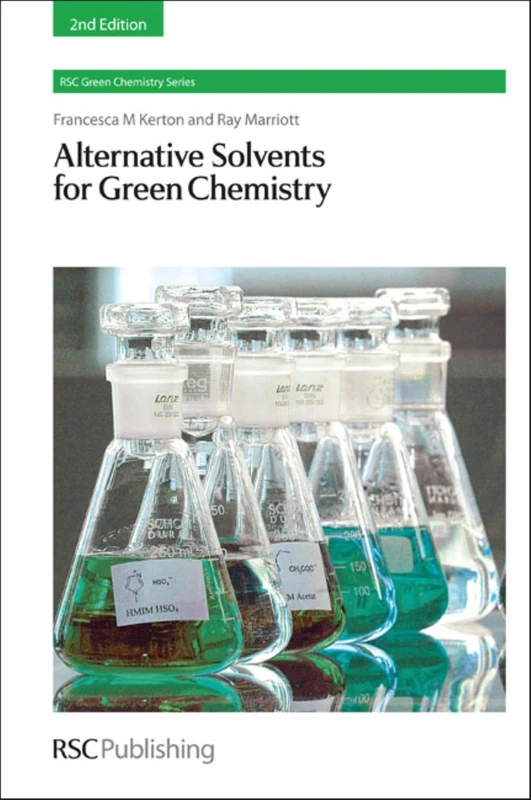
Royal Society of Chemistry Alternative Solvents for Green Chemistry (Green Chemistry Series)

Price data last checked 15 day(s) ago - will refresh soon

View at Amazon

We'll watch every seller, every day. One email when your price arrives.

Cheaper than 39% of the days we've watched it. Below what most people pay.

£52 today · 30-day average £58 · all-time low £46

NEW HERE?

Amazon shows you one price. We show you all of them.

Tosheroon watches Amazon prices so you don't have to. Every product on Amazon has a price history — we make it visible. Set the price you'd actually pay, and we'll email you the second it gets there. No app, no account, one email.

WHAT'S ON THIS PAGE

↓ Price chart
when this has been cheap or pricey
↓ Forecast
where the price is heading next
↓ Statistics
all-time high & low, recent range
↑ Price alert
name your number, we'll email you

Price History & Forecast

Grey patches = out of stock. Cheaper = lower on the chart. Hover for exact prices.

Last 76 days · 76 data points (no recent data)

Historical
Generating forecast…
£79.67 £42.60 £50.69 £58.78 £66.86 £74.95 £83.04 25 April 2026 13 May 2026 01 June 2026 20 June 2026 09 July 2026

Price Distribution

Price distribution over 76 days • 6 price levels

Days at Price
Current Price
34 days 12 days 2 days · current 11 days 8 days 9 days 0 9 17 26 34 £46 £47 £52 £55 £75 £80 Days at Price

Price Analysis

Most common price: £46 (34 days, 44.7%)

Price range: £46 - £80

Price levels: 6 different prices over 76 days

Description

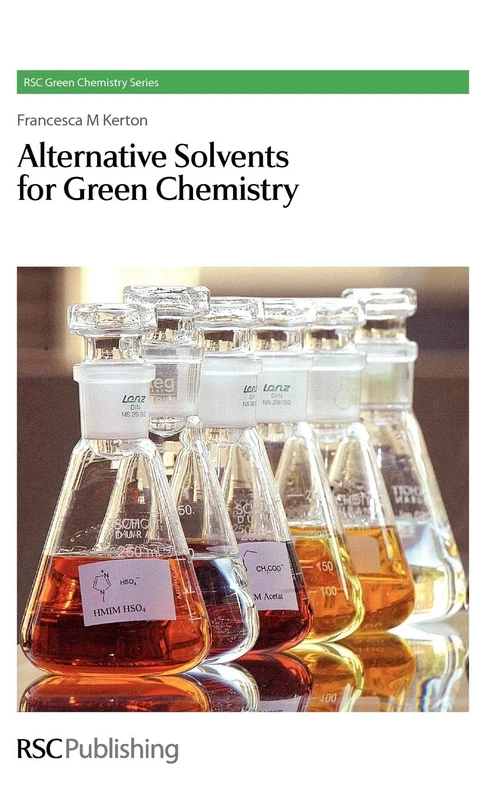
Everyone is becoming more environmentally conscious and therefore, chemical processes are being developed with their environmental burden in mind. This also means that more traditional chemical methods are being replaced with new innovations and this includes new solvents. Solvents are everywhere, but how necessary are they? They are used in most areas including synthetic chemistry, analytical chemistry, pharmaceutical production and processing, the food and flavour industry and the materials and coatings sectors. However, the principles of green chemistry guide us to use less of them, or to use safer, more environmentally friendly solvents if they are essential. Therefore, we should always ask ourselves, do we really need a solvent? Green chemistry, as a relatively new sub-discipline, is a rapidly growing field of research. Alternative solvents - including supercritical fluids and room temperature ionic liquids - form a significant portion of research in green chemistry. This is in part due to the hazards of many conventional solvents (e.g. toxicity and flammability) and the significant contribution that solvents make to the waste generated in many chemical processes. Solvents are important in analytical chemistry, product purification, extraction and separation technologies, and also in the modification of materials. Therefore, in order to make chemistry more sustainable in these fields, a knowledge of alternative, greener solvents is important. This book, which is part of a green chemistry series, uses examples that tie in with the 12 principles of green chemistry e.g. atom efficient reactions in benign solvents and processing of renewable chemicals/materials in green solvents. Readers get an overview of the many different kinds of solvents, written in such a way to make the book appropriate to newcomers to the field and prepare them for the 'green choices' available. The book also removes some of the mystique associated with 'alternative solvent' choices and includes information on solvents in different fields of chemistry such as analytical and materials chemistry in addition to catalysis and synthesis. The latest research developments, not covered elsewhere, are included such as switchable solvents and biosolvents. Also, some important areas that are often overlooked are described such as naturally sourced solvents (including ethanol and ethyl lactate) and liquid polymers (including poly(ethyleneglycol) and poly(dimethylsiloxane)). As well as these additional alternative solvents being included, the book takes a more general approach to solvents, not just focusing on the use of solvents in synthetic chemistry. Applications of solvents in areas such as analysis are overviewed in addition to the more widely recognised uses of alternative solvents in organic synthesis. Unfortunately, as the book shows, there is no universal green solvent and readers must ascertain their best options based on prior chemistry, cost, environmental benefits and other factors. It is important to try and minimize the number of solvent changes in a chemical process and therefore, the importance of solvents in product purification, extraction and separation technologies are highlighted. The book is aimed at newcomers to the field whether research students beginning investigations towards their thesis or industrial researchers curious to find out if an alternative solvent would be suitable in their work.

Product Specifications

Format
hardcover
Domain
Amazon UK
Release Date
13 February 2009
Listed Since
16 October 2008

Barcode

No barcode data available