£100.88

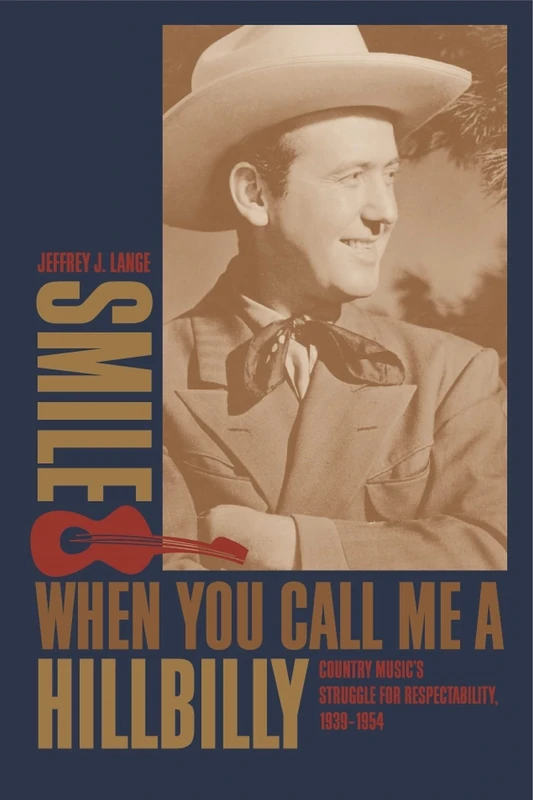
University of Georgia Press Smile When You Call Me a Hillbilly: Country Music's Struggle for Respectability, 1939-1954

Price data last checked 122 day(s) ago - refreshing...

View at Amazon

We'll watch every seller, every day. One email when your price arrives.

This is the most expensive it has ever been. Walk away.

£101 today · previous high £101 · all-time low £76

NEW HERE?

Amazon shows you one price. We show you all of them.

Tosheroon watches Amazon prices so you don't have to. Every product on Amazon has a price history — we make it visible. Set the price you'd actually pay, and we'll email you the second it gets there. No app, no account, one email.

WHAT'S ON THIS PAGE

↓ Price chart
when this has been cheap or pricey
↓ Forecast
where the price is heading next
↓ Statistics
all-time high & low, recent range
↑ Price alert
name your number, we'll email you

Price History & Forecast

Grey patches = out of stock. Cheaper = lower on the chart. Hover for exact prices.

Last 609 days • 609 data points (No recent data available)

Historical
Generating forecast...
£100.88 £73.46 £79.44 £85.42 £91.41 £97.39 £103.37 10 June 2024 09 November 2024 10 April 2025 09 September 2025 08 February 2026

Price Distribution

Price distribution over 609 days • 6 price levels

Days at Price
Current Price
187 days 221 days 15 days 151 days 19 days 16 days · current 0 55 111 166 221 £76 £80 £82 £92 £95 £101 Days at Price

Price Analysis

Most common price: £80 (221 days, 36.3%)

Price range: £76 - £101

Price levels: 6 different prices over 609 days

Description

Today, country music enjoys a national fan base that transcends both economic and social boundaries. Sixty years ago, however, it was primarily the music of rural, working-class whites living in the South and was perceived by many Americans as hillbilly music. In Smile When You Call Me a Hillbilly, Jeffrey J. Lange examines the 1940s and early 1950s as the most crucial period in country music s transformation from a rural, southern folk art form to a national phenomenon.In his meticulous analysis of changing performance styles and alterations in the lifestyles of listeners, Lange illuminates the acculturation of country music and its audience into the American mainstream. Dividing country music into six subgenres (progressive country, western swing, postwar traditional, honky-tonk, country pop, and country blues), Lange discusses the music s expanding appeal. As he analyzes the recordings and comments of each of the subgenre s most significant artists, including Roy Acuff, Bob Wills, Bill Monroe, Hank Williams, and Red Foley, he traces the many paths the musical form took on its road to respectability.Lange shows how along the way the music and its audience became more sophisticated, how the subgenres blended with one another and with American popular music, and how Nashville emerged as the country music hub. By 1954, the transformation from hillbilly music to country music was complete, precipitated by the modernizing forces of World War II and realized by the efforts of promoters, producers, and performers. Review "Smile When You Call Me a Hillbilly" is a very good summation of country music's history during the crucial years from 1939 to 1954. Lange does a particularly good job in exploring the tensions that accompanied the efforts made by entertainers and fans to create a musical product that would be both popular and roots-based. That struggle, of course, is still very much a part of the country music scene today.--Bill C. Malone "author of "Don't Get above Your Raisin' Country Music and the Southern Working Class" ""Smile When You Call Me a Hillbilly" ranks as the single most in-depth and detailed study of country music during World War II and the immediate postwar period, and as such, it is a welcome addition to the growing body of literature on the history of country music. Southern historians and country music scholars will appreciate Lange's efforts.--"Atlanta History"[A] welcome and revealing book.--David Cantwell ""No Depression" "[Lange] wears his quantification lightly, a very pleasing attribute, and mirrors in a way the achievement of his subject: using modern methods without losing track of the story that forms the power of the phenomenon.--"Arkansas Historical Quarterly"A lively, readable collection of well-written and researched essays about Country Music within the context of America's history.--"Southern Scribe"Jeffrey Lange describes this cultural evolution with clarity and an abundance of detail.--"American Studies"This clearly argued, well-researched addition to the scholarly literature on country music will appeal to scholars and fans of country music. Lange is sensitive to issues of race, class, and gender, and he provides a solid historical context for the forces that shaped country music's transformation between 1939 and 1954.--"Alabama Review"This is a text that will serve as a valuable reference book for anyone interested in locating the details behind the performers and recordings that made country music popular during the World War II and post-World War II eras.--"Georgia Historical Quarterly"""Smile When You Call Me a Hillbilly" is a very good summation of country music's history during the crucial years from 1939 to 1954. Lange does a particularly good job in exploring the tensions that accompanied the efforts made by entertainers and fans to create a musical product that would be both popular and roots-based. That struggle, of course, is still very much a par

Product Specifications

Format
Hardcover
Domain
Amazon UK
Release Date
30 April 2017
Listed Since
01 July 2017

Barcode

No barcode data available