We can't find the internet
Attempting to reconnect
Something went wrong
Hang in there while we get back on track
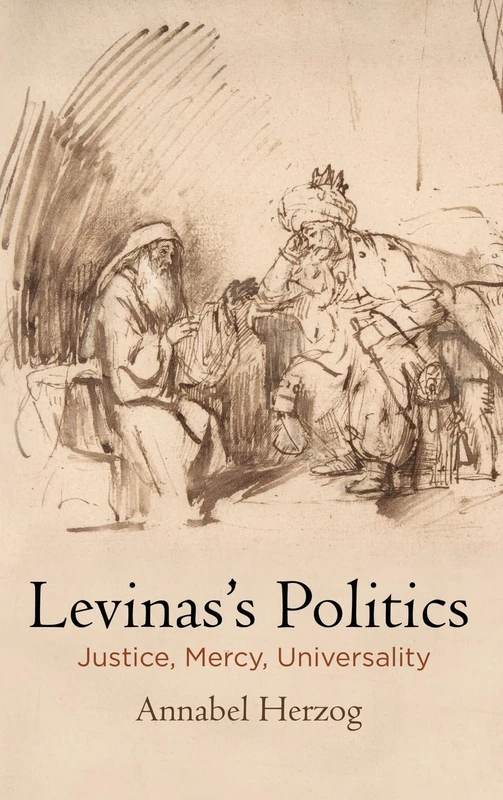
£39.11
It has never been this cheap. We have no record of a lower price.
£39 today · cheaper than every other day in the last 3 months
University of Pennsylvania Press Levinas's Politics: Justice, Mercy, Universality (Haney Foundation Series)
Price data last checked 23 day(s) ago - will refresh soon
We'll watch every seller, every day. One email when your price arrives.
Price History & Forecast
Grey patches = out of stock. Cheaper = lower on the chart. Hover for exact prices.
Last 68 days · 68 data points (no recent data)
Price data last checked 23 day(s) ago - will refresh soon
NEW HERE?
Amazon shows you one price. We show you all of them.
Tosheroon watches Amazon prices so you don't have to. Every product on Amazon has a price history — we make it visible. Set the price you'd actually pay, and we'll email you the second it gets there. No app, no account, one email.
WHAT'S ON THIS PAGE
when this has been cheap or pricey
where the price is heading next
all-time high & low, recent range
name your number, we'll email you
Price Distribution
Price distribution over 68 days • 1 price levels
Price Analysis
Most common price: £39 (68 days, 100.0%)
Price range: £39 - £39
Price levels: 1 different prices over 68 days
Description
Product Specifications
- Format
- hardcover
- ASIN
- 0812251970
- Domain
- Amazon UK
- Release Date
- 13 March 2020
- Listed Since
- 27 August 2019
Barcode
No barcode data available
Similar Products You Might Like

Difficult Justice: Commentaries on Levinas and Politics
University of Toronto Press

Levinas in Jerusalem: Phenomenology, Ethics, Politics, Aesthetics: 14 (Amsterdam Studies in Jewish Philosophy, 14)
Springer

Levinas and Education: At the Intersection of Faith and Reason (Routledge International Studies in the Philosophy of Education)
Routledge

Morality and Religion: The Jewish Story (Jewish Thought and Philosophy)
MACMILLAN

The Trace of Judaism: Dostoevsky, Babel, Mandelstam, Levinas (Studies in Russian Literature and Theory)
Northwestern
Morality and Global Justice: Justifications and Applications
Routledge

Islamic Philosophy and Occidental Phenomenology in Dialogue: The Logos of Life and Cultural Interlacing: 7
Springer

Jean Améry: Beyond the Mind's Limits
MACMILLAN
Theoretical Writings: Alain Badiou (Athlone Contemporary European Thinkers)
Bloomsbury

Intrinsic Value: Concept and Warrant (Cambridge Studies in Philosophy)
Cambridge University Press

Harmful Thoughts: Essays on Law, Self, and Morality
Princeton University Press

When Jews Argue: Between the University and the Beit Midrash (Routledge Approaches to History)
Routledge

Freedom and Law: A Jewish-Christian Apologetics
Fordham University Press

Putting God First: Jewish Humanism after Heidegger
Gefen Publishing House

Continental Philosophy and Philosophy of Religion: 4 (Handbook of Contemporary Philosophy of Religion, 4)
Springer
Procedural Justice: Allocating to Individuals - Law and Philosophy Library
Springer

What Makes Life Meaningful?: A Debate (Little Debates about Big Questions)
Routledge

The Sanctity of Human Life
Georgetown University Press

Maimonides and Philosophy: 114 (International Archives of the History of Ideas Archives internationales d'histoire des idées, 114)
Springer

Intrigues: From Being to the Other
Fordham University Press

A Plea for Naturalistic Metaphysics: Why Analytic Metaphysics is Not Enough
MACMILLAN

The Routledge Handbook of Law and Society
Routledge

Facing the Other: The Ethics of Emmanuel Levinas (Routledge Jewish Studies Series)
Routledge

Theory of Legal Principles: Springer Law & Philosophy Library
Springer