We can't find the internet
Attempting to reconnect
Something went wrong
Hang in there while we get back on track
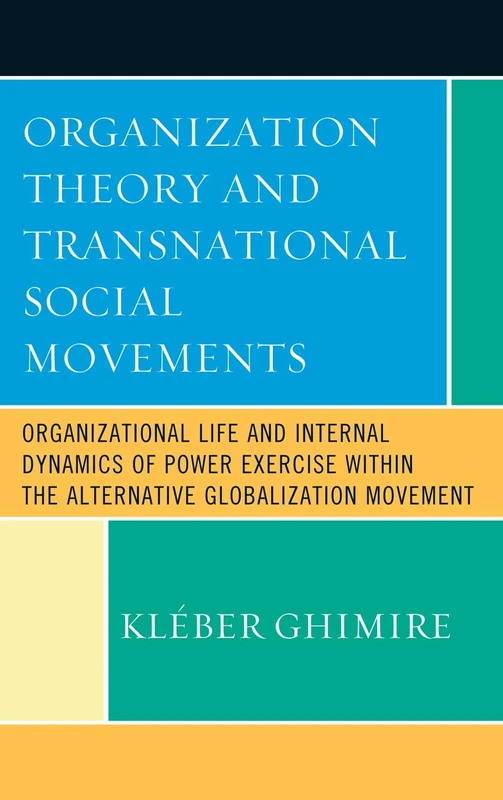
£80.34
It has never been this cheap. We have no record of a lower price.
£80 today · cheaper than every other day in the last 3 months
Lexington Books Organization Theory and Transnational Social Movements: Organizational Life and Internal Dynamics of Power Exercise within the Alternative Globalization Movement
We'll watch every seller, every day. One email when your price arrives.
Price History & Forecast
Grey patches = out of stock. Cheaper = lower on the chart. Hover for exact prices.
Last 56 days · 56 data points (no recent data)
NEW HERE?
Amazon shows you one price. We show you all of them.
Tosheroon watches Amazon prices so you don't have to. Every product on Amazon has a price history — we make it visible. Set the price you'd actually pay, and we'll email you the second it gets there. No app, no account, one email.
WHAT'S ON THIS PAGE
when this has been cheap or pricey
where the price is heading next
all-time high & low, recent range
name your number, we'll email you
Price Distribution
Price distribution over 56 days • 1 price levels
Price Analysis
Most common price: £80 (56 days, 100.0%)
Price range: £80 - £80
Price levels: 1 different prices over 56 days
Description
Product Specifications
- Brand
- Lexington Books
- Format
- hardcover
- ASIN
- 0739165577
- Domain
- Amazon UK
- Release Date
- 08 April 2011
- Listed Since
- 21 January 2011
Barcode
No barcode data available
Similar Products You Might Like

Globalized Authoritarianism: Megaprojects, Slums, and Class Relations in Urban Morocco: 27 (Globalization and Community)
University of Minnesota Press

Social Practices and Dynamic Non-Humans: Nature, Materials and Technologies
MACMILLAN

Worldly Leadership: Alternative Wisdoms for a Complex World
MACMILLAN

Handbuch Organisationspädagogik: 17 (Organisation und Pädagogik, 17)
Springer VS

Human Rights as Battlefields: Changing Practices and Contestations (Human Rights Interventions)
MACMILLAN
Human Rights as Battlefields: Changing Practices and Contestations (Human Rights Interventions)
MACMILLAN

Globalisation, Global Justice and Social Work
Routledge

The Primacy of Persons in Politics: Empiricism and Political Philosophy
Catholic University of America Press

Reassembling Activism, Activating Assemblages - Routledge
Routledge

The Rule of Law in Global Governance
MACMILLAN

Cosmopolitanism as Nonrelationism: Who is Cosmopolitan Now? (International Political Theory)
MACMILLAN

Judith Butler and Organization Theory - Routledge Studies
Routledge

Multinationals on Trial: Foreign Investment Matters
Routledge

Grandeur and Twilight of Radical Universalism
Routledge
Re-Evaluating Regional Organizations: Behind the Smokescreen of Official Mandates
MACMILLAN

International Immigration, Integration and Sustainability in Small Towns and Villages: Socio-Territorial Challenges in Rural and Semi-Rural Europe (Migration, Diasporas and Citizenship)
MACMILLAN

Judith Butler and Organization Theory (Routledge Studies in Gender and Organizations)
Routledge

Group Work that Works: Student Collaboration for 21st Century Success (Eye on Education)
Routledge

Bürger und Demokratie in Ost und West: Studien zur politischen Kultur und zum politischen Prozess. Festschrift für Hans-Dieter Klingemann
VS Verlag für Sozialwissenschaften

Changing France: The Politics that Markets Make (French Politics, Society and Culture)
MACMILLAN

Understanding Leadership in Complex Systems: A Praxeological Perspective (Understanding Complex Systems)
Springer

Bygone Utopias and Farm Protest in the Rural Midwest: Returning Home
MACMILLAN

Changing France: The Politics that Markets Make (French Politics, Society and Culture)
MACMILLAN

The Globalization of Gender: Knowledge, Mobilizations, Frameworks of Action (Routledge Studies in Gender and Global Politics)
Routledge