We can't find the internet
Attempting to reconnect
Something went wrong
Hang in there while we get back on track
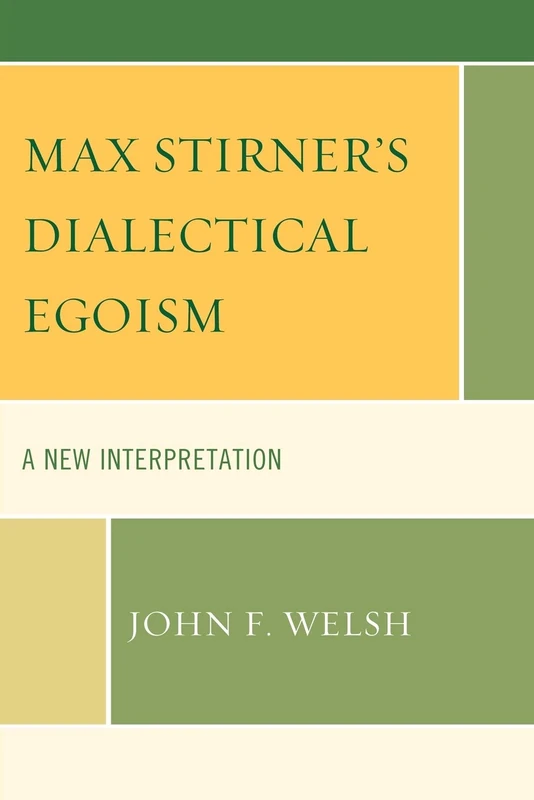
£44.99
It has never been this cheap. We have no record of a lower price.
£45 today · cheaper than every other day in the last 3 months
Bloomsbury Max Stirner's Dialectical Egoism: A New Interpretation
We'll watch every seller, every day. One email when your price arrives.
Price History & Forecast
Grey patches = out of stock. Cheaper = lower on the chart. Hover for exact prices.
Last 83 days · 83 data points (no recent data)
NEW HERE?
Amazon shows you one price. We show you all of them.
Tosheroon watches Amazon prices so you don't have to. Every product on Amazon has a price history — we make it visible. Set the price you'd actually pay, and we'll email you the second it gets there. No app, no account, one email.
WHAT'S ON THIS PAGE
when this has been cheap or pricey
where the price is heading next
all-time high & low, recent range
name your number, we'll email you
Price Distribution
Price distribution over 83 days • 2 price levels
Price Analysis
Most common price: £45 (72 days, 86.7%)
Price range: £45 - £50
Price levels: 2 different prices over 83 days
Description
Product Specifications
- Brand
- Bloomsbury
- Format
- paperback
- ASIN
- 0739141562
- Domain
- Amazon UK
- Release Date
- 23 September 2010
- Listed Since
- 23 June 2010
Barcode
No barcode data available
Similar Products You Might Like

Max Stirner's Dialectical Egoism: A New Interpretation
Lexington Books

Max Stirner on the Path of Doubt (Continental Philosophy and the History of Thought)
Bloomsbury

Individuality and Beyond: Nietzsche Reads Emerson
Oxford University Press

Individuality and Beyond: Nietzsche Reads Emerson
Oxford University Press
Individual and Community in Nietzsche's Philosophy
Cambridge University Press

Max Stirner and Nihilism
Boydell Press

Nietzsche, Aesthetics and Modernity
Cambridge University Press

Stirner: The Ego and its Own (Cambridge Texts in the History of Political Thought)
Cambridge University Press

Womanizing Nietzsche: Philosophy's Relation to Feminine
Routledge

Heidegger (The Routledge Philosophers)
Routledge

Nietzsche's Legacy for Education: Past and Present Values (Critical Studies in Education and Culture)
Bloomsbury

Classic Editions Friedrich Nietzsche 6 Book Collection
Classic Editions

Nietzsche in the Nineteenth Century: Social Questions and Philosophical Interventions (Intellectual History of the Modern Age)
University of Pennsylvania Press

Haymarket Books Nietzsche, the Aristocratic Rebel Biography
Haymarket Books

Nietzsche's Philosophy of Religion
Cambridge University Press

Nietzsche's Therapy: Self-cultivation in the Middle Works
Lexington Books

Nietzsche on Women and the Eternal-Feminine: A Critique of Truth and Values
Bloomsbury

The Challenges of Globalization: Rethinking Nature, Culture, and Freedom (AJES - Studies in Economic Reform and Social Justice)
Wiley

Introductions to Nietzsche
Cambridge University Press

Nietzsche as Political Philosopher: 3 (Nietzsche Today, 3)
De Gruyter

Nietzsche, German Idealism and Its Critics: 4 (Nietzsche Today, 4)
De Gruyter

Hegel, Nietzsche, and Philosophy: Thinking Freedom (Modern European Philosophy)
Cambridge University Press

Value in Modernity: The Philosophy of Existential Modernism in Nietzsche, Scheler, Sartre, Musil
Oxford University Press
Stanford University Press - Nietzsche Unpublished Fragments Vol 15
Stanford University Press