£43.41

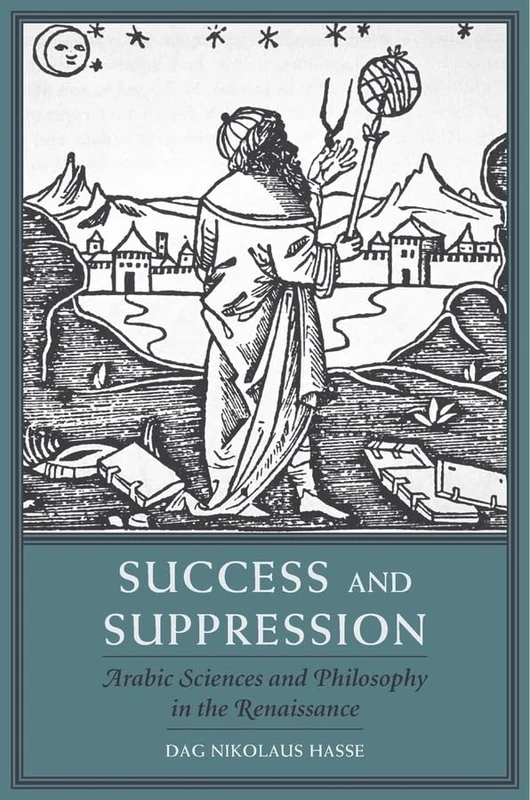
Harvard University Press Success and Suppression: Arabic Sciences and Philosophy in the Renaissance (I Tatti Studies in Italian Renaissance History): 19

Price data checked 5 days ago

View at Amazon

We'll watch every seller, every day. One email when your price arrives.

This is the most expensive it has ever been. Walk away.

£43 today · previous high £43 · all-time low £43

NEW HERE?

Amazon shows you one price. We show you all of them.

Tosheroon watches Amazon prices so you don't have to. Every product on Amazon has a price history — we make it visible. Set the price you'd actually pay, and we'll email you the second it gets there. No app, no account, one email.

WHAT'S ON THIS PAGE

↓ Price chart
when this has been cheap or pricey
↓ Forecast
where the price is heading next
↓ Statistics
all-time high & low, recent range
↑ Price alert
name your number, we'll email you

Price History & Forecast

Grey patches = out of stock. Cheaper = lower on the chart. Hover for exact prices.

Last 86 days • 86 data points (No recent data available)

Historical
Generating forecast...
£43.41 £43.00 £43.09 £43.18 £43.27 £43.36 £43.45 09 April 2026 30 April 2026 21 May 2026 11 June 2026 03 July 2026

Price Distribution

Price distribution over 86 days • 1 price levels

Days at Price
86 days 0 22 43 65 86 £43 Days at Price

Price Analysis

Most common price: £43 (86 days, 100.0%)

Price range: £43 - £43

Price levels: 1 different prices over 86 days

Description

The Renaissance marked a turning point in Europe's relationship to Arabic thought. On the one hand, Dag Nikolaus Hasse argues, it was the period in which important Arabic traditions reached the peak of their influence in Europe. On the other hand, it is the time when the West began to forget, and even actively suppress, its debt to Arabic culture. Success and Suppression traces the complex story of Arabic influence on Renaissance thought. It is often assumed that the Renaissance had little interest in Arabic sciences and philosophy, because humanist polemics from the period attacked Arabic learning and championed Greek civilisation. Yet Hasse shows that Renaissance denials of Arabic influence emerged not because scholars of the time rejected that intellectual tradition altogether but because a small group of anti-Arab hard-liners strove to suppress its powerful and persuasive influence. The period witnessed a boom in new translations and multivolume editions of Arabic authors, and European philosophers and scientists incorporated and often celebrated Arabic thought in their work, especially in medicine, philosophy, and astrology. But the famous Arabic authorities were a prominent obstacle to the Renaissance project of renewing European academic culture through Greece and Rome, and radical reformers accused Arabic science of linguistic corruption, plagiarism, or irreligion. Hasse shows how a mixture of ideological and scientific motives led to the decline of some Arabic traditions in important areas of European culture, while others continued to flourish.

Key Features

Harvard University Press

Product Specifications

Format
hardcover
Domain
Amazon UK
Release Date
28 November 2016
Listed Since
19 April 2016

Barcode

No barcode data available