£33.12

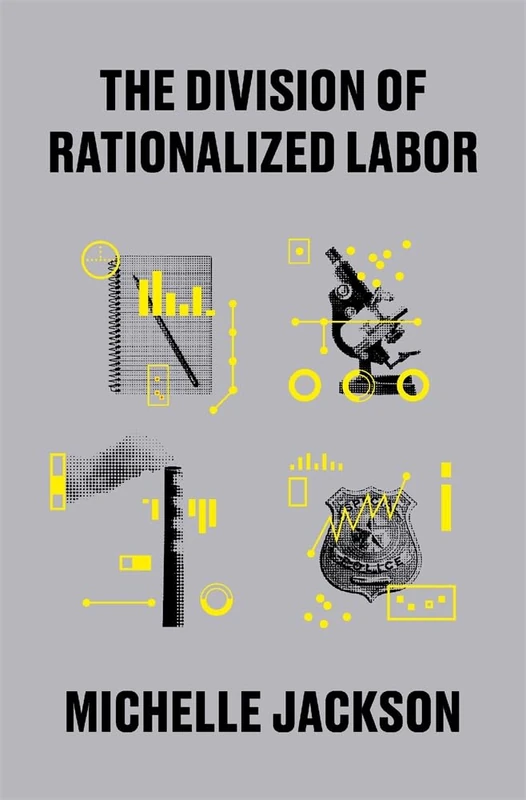
Harvard University Press The Division of Rationalized Labor

Price data checked 1 day ago

View at Amazon

We'll watch every seller, every day. One email when your price arrives.

About as cheap as it gets. The only time it was cheaper was 1 month ago.

£33 today · all-time low £32 (Apr 2026) · usually £32

NEW HERE?

Amazon shows you one price. We show you all of them.

Tosheroon watches Amazon prices so you don't have to. Every product on Amazon has a price history — we make it visible. Set the price you'd actually pay, and we'll email you the second it gets there. No app, no account, one email.

WHAT'S ON THIS PAGE

↓ Price chart
when this has been cheap or pricey
↓ Forecast
where the price is heading next
↓ Statistics
all-time high & low, recent range
↑ Price alert
name your number, we'll email you

Price History & Forecast

Grey patches = out of stock. Cheaper = lower on the chart. Hover for exact prices.

Last 75 days • 75 data points

Historical
Generating forecast...
£35.04 £31.56 £32.32 £33.08 £33.84 £34.60 £35.36 01 April 2026 19 April 2026 08 May 2026 26 May 2026 14 June 2026

Price Distribution

Price distribution over 75 days • 4 price levels

Days at Price
Current Price
71 days 2 days · current 1 day 1 day 0 18 36 53 71 £32 £33 £34 £35 Days at Price

Price Analysis

Most common price: £32 (71 days, 94.7%)

Price range: £32 - £35

Price levels: 4 different prices over 75 days

Description

A pathbreaking study of why, paradoxically, workforce specialization and job responsibilities have increased hand in hand. In the United States and other late-industrial countries, the division of labor has changed radically over the last 150 years. This comes as no surprise: the nature of work has been transformed by new technologies, new discoveries, and new challenges. While the fact of change was predictable, the type of change is not at all as theorists envisioned. For all their differences, Adam Smith, Karl Marx, Emile Durkheim, and Max Weber each presumed that specialized workers would perform a narrower range of tasks. The early history of the industrial age supported this view. As the assembly line overtook the workshop, the artisan who constructed every part of a useful object was replaced with workers who handled a single piece of the work process. The Division of Rationalized Labor demonstrates that—although early industrialization may have operated as Smith, Marx, and their colleagues surmised—in late industrialization we are witnessing something quite different: specialization in many occupations has actually led to workers taking on an increasingly wide range of responsibilities. Marshaling rich historical and statistical data, Michelle Jackson shows how this paradox of specialization emerges today in education, law enforcement, medicine, and manufacturing. Jackson argues that the development of probabilistic science provided the foundation for growing job complexity. As researchers learned which levers to pull in order to maximize productivity in a given industry, they created new tasks for the workers who specialized in producing industry outputs. As researchers developed the capacity to predict bad outcomes—criminality, low test scores, poor health—they left police, teachers, doctors, and nurses responsible for increasingly complicated preventive work. Analogous situations arise throughout the labor force, ensuring that workers across the occupational structure are overworked and overwhelmed.

Product Specifications

Format
hardcover
Domain
Amazon UK
Release Date
30 January 2026
Listed Since
12 April 2025

Barcode

No barcode data available