We can't find the internet
Attempting to reconnect
Something went wrong
Hang in there while we get back on track

£95.57
It has never been this cheap. We have no record of a lower price.
£96 today · cheaper than every other day in the last 3 months
Wiley-Blackwell Marx After Marxism: The Philosophy of Karl Marx
Price data last checked 30 day(s) ago - will refresh soon
We'll watch every seller, every day. One email when your price arrives.
Price History & Forecast
Grey patches = out of stock. Cheaper = lower on the chart. Hover for exact prices.
Last 61 days · 61 data points (no recent data)
Price data last checked 30 day(s) ago - will refresh soon
NEW HERE?
Amazon shows you one price. We show you all of them.
Tosheroon watches Amazon prices so you don't have to. Every product on Amazon has a price history — we make it visible. Set the price you'd actually pay, and we'll email you the second it gets there. No app, no account, one email.
WHAT'S ON THIS PAGE
when this has been cheap or pricey
where the price is heading next
all-time high & low, recent range
name your number, we'll email you
Price Distribution
Price distribution over 61 days • 1 price levels
Price Analysis
Most common price: £96 (61 days, 100.0%)
Price range: £96 - £96
Price levels: 1 different prices over 61 days
Description
Product Specifications
- Brand
- Wiley-Blackwell
- Format
- hardcover
- ASIN
- 0631231897
- Domain
- Amazon UK
- Release Date
- 21 March 2002
- Listed Since
- 12 February 2007
Barcode
No barcode data available
Similar Products You Might Like

In Kant's Wake: Philosophy in the Twentieth Century
Wiley-Blackwell

Hegel's Phenomenology: The Dialectical Justification of Philosophy's First Principles: Volume 57
McGill-Queen's University Press

The Philosophy and Politics of Aesthetic Experience: German Romanticism and Critical Theory (Political Philosophy and Public Purpose)
MACMILLAN

The Philosophy and Politics of Aesthetic Experience: German Romanticism and Critical Theory (Political Philosophy and Public Purpose)
MACMILLAN

Hegel's Philosophical Psychology (Routledge Studies in Nineteenth-Century Philosophy)
Routledge

The Palgrave Hegel Handbook (Palgrave Handbooks in German Idealism)
MACMILLAN

Hegel (The Routledge Philosophers)
Routledge

Hegel's Theory of Normativity: The Systematic Foundations of the Philosophical Science of Right
Northwestern

Understanding Hegelianism (Understanding Movements in Modern Thought)
Routledge

The Hegel Reader (Wiley Blackwell Readers)
Wiley

Herder: Philosophical Writings (Cambridge Texts in the History of Philosophy)
Cambridge University Press

Hegel: New Directions
Routledge

Reading Hegel's Phenomenology (Studies in Continental Thought)
Indiana University Press

Hegel's Phenomenology of Spirit: Not Missing the Trees for the Forest
Lexington Books

Starting with Hegel
Bloomsbury

Hegel, Logic and Speculation (Bloomsbury Studies in Continental Philosophy)
Bloomsbury

Education in Hegel (Continuum Studies in Educational Research)
Bloomsbury
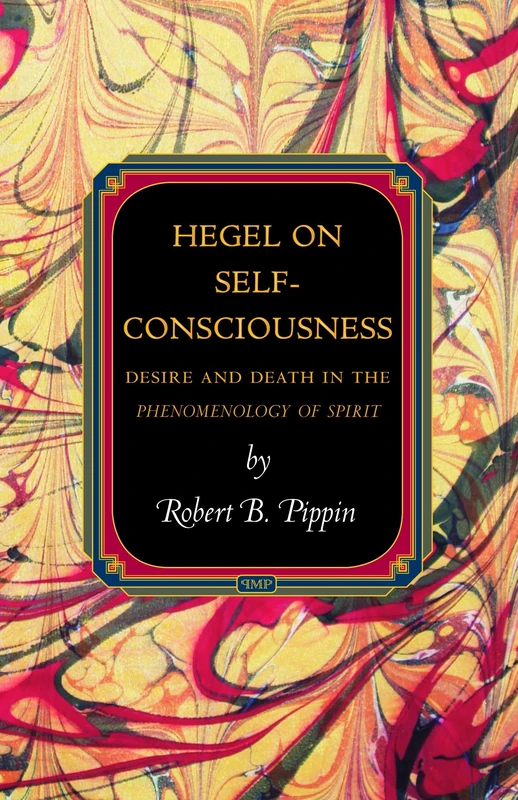
Hegel on Self-Consciousness: Desire and Death in the Phenomenology of Spirit: 35 (Princeton Monographs in Philosophy)
Princeton University Press

Revisiting the European Union as Empire - Critical Studies
Routledge

Heidegger’s Politics of Enframing: Technology and Responsibility (Bloomsbury Studies in Continental Philosophy)
Bloomsbury

Hegel's Concept of Life: Self-Consciousness, Freedom, Logic
Oxford University Press
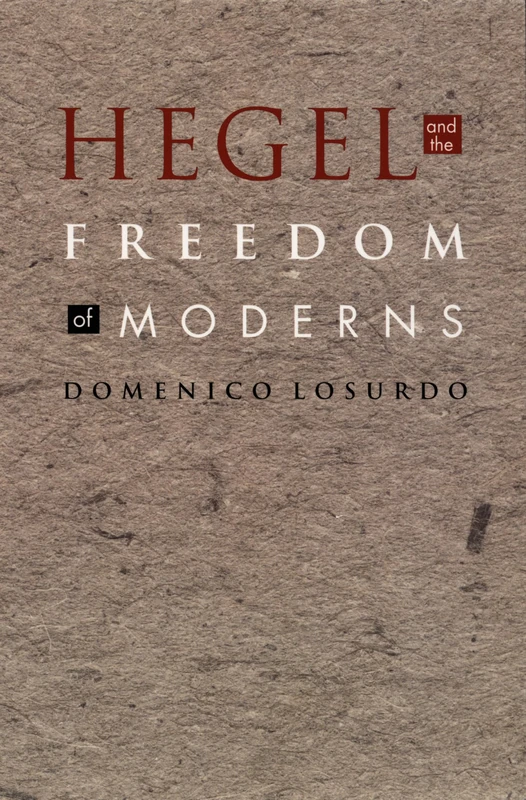
Hegel and the Freedom of Moderns (Post-Contemporary Interventions)
Duke University Press

Hegel and the Sciences: 64 (Boston Studies in the Philosophy and History of Science, 64)
Springer

Continental Philosophy: An Anthology: 6 (Wiley Philosophy Anthologies)
Wiley