£68.99

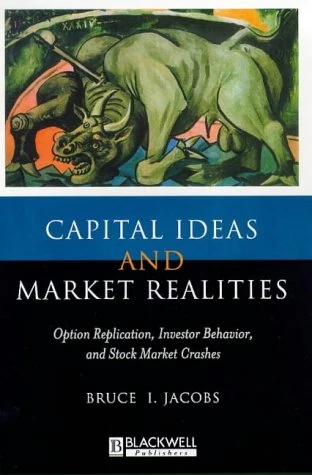
Wiley-Blackwell Capital Ideas and Market Realities : Option Replication, Investor Behavior, and Stock Market Crashes

Price data last checked 89 day(s) ago - refreshing...

View at Amazon

We'll watch every seller, every day. One email when your price arrives.

It has never been this cheap. We have no record of a lower price.

£69 today · cheaper than every other day in the last 3 months

NEW HERE?

Amazon shows you one price. We show you all of them.

Tosheroon watches Amazon prices so you don't have to. Every product on Amazon has a price history — we make it visible. Set the price you'd actually pay, and we'll email you the second it gets there. No app, no account, one email.

WHAT'S ON THIS PAGE

↓ Price chart
when this has been cheap or pricey
↓ Forecast
where the price is heading next
↓ Statistics
all-time high & low, recent range
↑ Price alert
name your number, we'll email you

Price History & Forecast

Grey patches = out of stock. Cheaper = lower on the chart. Hover for exact prices.

Last 2 days · 2 data points (no recent data)

Historical
Generating forecast…
£68.99 £65.54 £66.92 £68.30 £69.68 £71.06 £72.44 14 April 2026 14 April 2026 14 April 2026 14 April 2026 15 April 2026

Price Distribution

Price distribution over 2 days • 1 price levels

Days at Price
2 days 0 1 1 2 2 £69 Days at Price

Price Analysis

Most common price: £69 (2 days, 100.0%)

Price range: £69 - £69

Price levels: 1 different prices over 2 days

Description

The summer and fall of 1998 witnessed some of the most turbulent financial markets the world has ever seen. The implosion of the Russian financial markets and investors' ensuing flight to quality propelled the giant hedge-fund, long-term Capital Management, to the brink of collapse and left the investment portfolios of many of Wall Street's major banks and brokerage houses teetering on the brink. The US equity market dropped precipitously at the end of August and continued over the next month to experience levels of volatility not seen since the major crash of October 1987. Yet, within months of the August sell-off, US stocks had bounced back to new highs. How can markets fall so fast and recover so quickly? Bruce Jacobs sifts through the history of modern finance, from the efficient market hypothesis to behavioral psychology and chaos theory, to determine the cause of recent market crashes.He finds that some investment strategies, especially those based on theories that ignore the human element, can self-destruct, taking markets down with them. Ironically, some strategies that purport to reduce the risk of investing can pose the greater danger. Of particular concern is a trading strategy that grew out the option pricing model developed by the late Fisher Black and Nobel laureates Myron Scholes and Robert Merton. Used by market professionals, this strategy, known as option replication, requires mechanistic selling as stock prices decline and buying as stock prices rise. When a large enough number of investors engage in this type of trend-following "dynamic hedging", their trading demands can sweep markets along with them, elevating stock prices at some times and causing dramatic price drops at others.Dynamic hedging associated with some $100 billion in option-replication strategies caused a US stock market crash in 1987 that wiped out almost a quarter of US equity value and ignited market crashes around the world. Today, the same dynamic hedging underlies hundreds of billions of dollars in institutional and retail products. "Capital Ideas and Market Realities" uncovers the hidden risks these products pose for market stability and investor wealth.

Product Specifications

Format
hardcover
Domain
Amazon UK
Release Date
20 May 1999
Listed Since
09 January 2007

Barcode

No barcode data available