We can't find the internet
Attempting to reconnect
Something went wrong
Hang in there while we get back on track
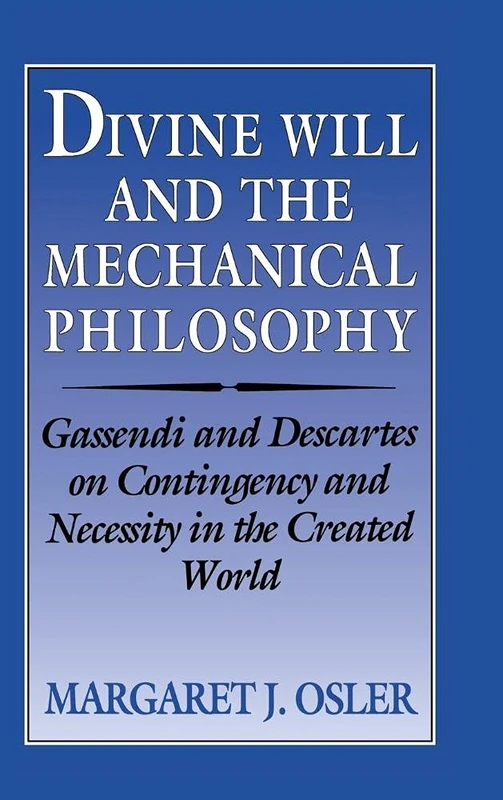
£93.99
About as cheap as it gets — within 5% of the all-time low it hit 3 months ago.
£94 today · all-time low £91 (Jul 2026) · usually the usual
Cambridge University Press Divine Will and the Mechanical Philosophy: Gassendi and Descartes on Contingency and Necessity in the Created World
Price data last checked 36 day(s) ago - refreshing...
We'll watch every seller, every day. One email when your price arrives.
Price History & Forecast
Grey patches = out of stock. Cheaper = lower on the chart. Hover for exact prices.
Last 55 days · 55 data points (no recent data)
Price data last checked 36 day(s) ago - refreshing...
NEW HERE?
Amazon shows you one price. We show you all of them.
Tosheroon watches Amazon prices so you don't have to. Every product on Amazon has a price history — we make it visible. Set the price you'd actually pay, and we'll email you the second it gets there. No app, no account, one email.
WHAT'S ON THIS PAGE
when this has been cheap or pricey
where the price is heading next
all-time high & low, recent range
name your number, we'll email you
Price Distribution
Price distribution over 55 days • 2 price levels
Price Analysis
Most common price: £91 (37 days, 67.3%)
Price range: £91 - £94
Price levels: 2 different prices over 55 days
Description
Product Specifications
- Format
- hardcover
- ASIN
- 0521461049
- Domain
- Amazon UK
- Release Date
- 24 June 1994
- Listed Since
- 12 January 2007
Barcode
No barcode data available
Similar Products You Might Like

Academic Skepticism in Seventeenth-Century French Philosophy: The Charronian Legacy 1601-1662: 215 (International Archives of the History of Ideas Archives internationales d'histoire des idées, 215)
Springer
Descartes' Theory of Ideas (Continuum Studies in Philosophy): 20
Bloomsbury

Descartes: 21 (Blackwell Great Minds)
Wiley
Pierre Gassendi: Humanism, Science, and the Birth of Modern Philosophy (Routledge Studies in Seventeenth-Century Philosophy)
Routledge

The Blackwell Guide to Descartes' Meditations (Blackwell Guides to Great Works)
Wiley-Blackwell

On the Ego and on God: Further Cartesian Questions (Perspectives in Continental Philosophy)
Fordham University Press

Œuvres (1): Tome 1
GALLIMARD

Œuvres (2): Tome 2
GALLIMARD

The Descartes Dictionary (Bloomsbury Philosophy Dictionaries)
Bloomsbury

Descartes′ Metaphysical Physics (Science and Its Conceptual Foundations series)
University of Chicago Press

Women and Liberty, 1600-1800: Philosophical Essays
Oxford University Press

The Cambridge Descartes Lexicon
Cambridge University Press

Descartes: A Guide for the Perplexed (Guides for the Perplexed)
Bloomsbury
Springer - Rethinking Descartes's Substance Dualism Monograph
Springer

Bibliographia Cartesiana: A Critical Guide to the Descartes Literature 1800–1960: 5 (International Archives of the History of Ideas Archives internationales d'histoire des idées, 5)
Springer

Between Two Worlds: A Reading of Descartes's Meditations
Princeton University Press

Nicholas of Cusa's "On Learned Ignorance: A Commentary on "De Docta Ignorantia
Catholic University of America Press

Squaring the Circle in Descartes' Meditations: The Strong Validation of Reason
Cambridge University Press
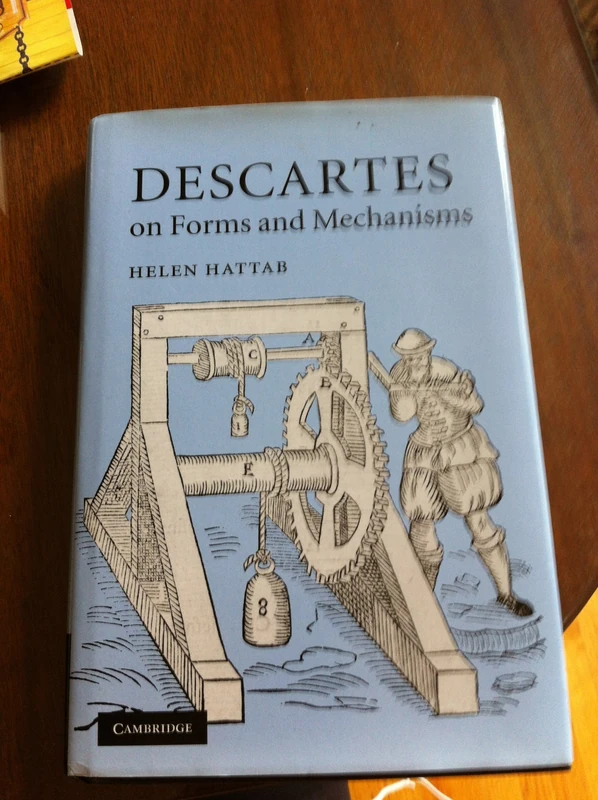
Descartes on Forms and Mechanisms
Cambridge University Press