£35.64

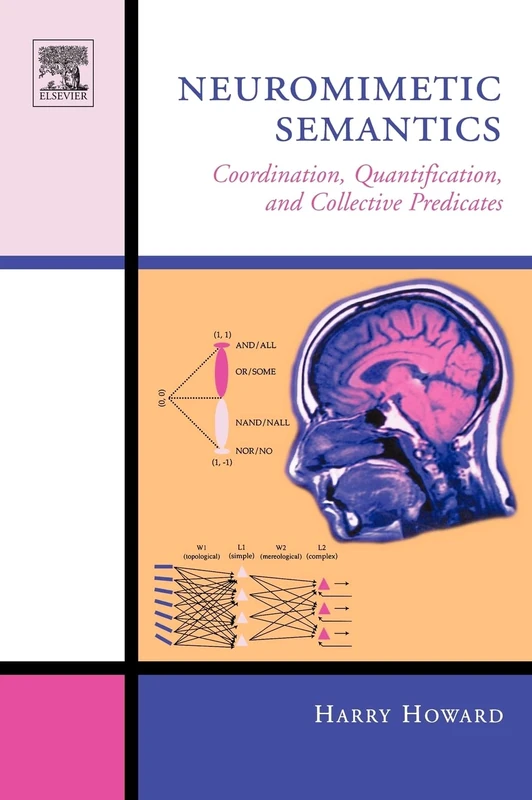
Elsevier Neuromimetic Semantics: Coordination, quantification, and collective predicates

Price data last checked 25 day(s) ago - will refresh soon

View at Amazon

We'll watch every seller, every day. One email when your price arrives.

It has never been this cheap. We have no record of a lower price.

£36 today · cheaper than every other day in the last 3 months

NEW HERE?

Amazon shows you one price. We show you all of them.

Tosheroon watches Amazon prices so you don't have to. Every product on Amazon has a price history — we make it visible. Set the price you'd actually pay, and we'll email you the second it gets there. No app, no account, one email.

WHAT'S ON THIS PAGE

↓ Price chart
when this has been cheap or pricey
↓ Forecast
where the price is heading next
↓ Statistics
all-time high & low, recent range
↑ Price alert
name your number, we'll email you

Price History & Forecast

Grey patches = out of stock. Cheaper = lower on the chart. Hover for exact prices.

Last 66 days · 66 data points (no recent data)

Historical
Generating forecast…
£46.11 £34.59 £37.11 £39.62 £42.13 £44.64 £47.16 26 June 2026 12 July 2026 28 July 2026 13 August 2026 30 August 2026

Price Distribution

Price distribution over 66 days • 3 price levels

Days at Price
Current Price
35 days · current 11 days 20 days 0 9 18 26 35 £36 £45 £46 Days at Price

Price Analysis

Most common price: £36 (35 days, 53.0%)

Price range: £36 - £46

Price levels: 3 different prices over 66 days

Description

This book attempts to marry truth-conditional semantics with cognitive linguistics in the church of computational neuroscience. To this end, it examines the truth-conditional meanings of coordinators, quantifiers, and collective predicates as neurophysiological phenomena that are amenable to a neurocomputational analysis. Drawing inspiration from work on visual processing, and especially the simple/complex cell distinction in early vision (V1), we claim that a similar two-layer architecture is sufficient to learn the truth-conditional meanings of the logical coordinators and logical quantifiers. As a prerequisite, much discussion is given over to what a neurologically plausible representation of the meanings of these items would look like. We eventually settle on a representation in terms of correlation, so that, for instance, the semantic input to the universal operators (e.g. and, all)is represented as maximally correlated, while the semantic input to the universal negative operators (e.g. nor, no)is represented as maximally anticorrelated. On the basis this representation, the hypothesis can be offered that the function of the logical operators is to extract an invariant feature from natural situations, that of degree of correlation between parts of the situation. This result sets up an elegant formal analogy to recent models of visual processing, which argue that the function of early vision is to reduce the redundancy inherent in natural images. Computational simulations are designed in which the logical operators are learned by associating their phonological form with some degree of correlation in the inputs, so that the overall function of the system is as a simple kind of pattern recognition. Several learning rules are assayed, especially those of the Hebbian sort, which are the ones with the most neurological support. Learning vector quantization (LVQ) is shown to be a perspicuous and efficient means of learning the patterns that are of interest. We draw a formal parallelism between the initial, competitive layer of LVQ and the simple cell layer in V1, and between the final, linear layer of LVQ and the complex cell layer in V1, in that the initial layers are both selective, while the final layers both generalize. It is also shown how the representations argued for can be used to draw the traditionally-recognized inferences arising from coordination and quantification, and why the inference of subalternacy breaks down for collective predicates. Finally, the analogies between early vision and the logical operators allow us to advance the claim of cognitive linguistics that language is not processed by proprietary algorithms, but rather by algorithms that are general to the entire brain. Thus in the debate between objectivist and experiential metaphysics, this book falls squarely into the camp of the latter. Yet it does so by means of a rigorous formal, mathematical, and neurological exposition – in contradiction of the experiential claim that formal analysis has no place in the understanding of cognition. To make our own counter-claim as explicit as possible, we present a sketch of the LVQ structure in terms of mereotopology, in which the initial layer of the network performs topological operations, while the final layer performs mereological operations. The book is meant to be self-contained, in the sense that it does not assume any prior knowledge of any of the many areas that are touched upon. It therefore contains mini-summaries of biological visual processing, especially the retinocortical and ventral /what?/ parvocellular pathways; computational models of neural signaling, and in particular the reduction of the Hodgkin-Huxley equations to the connectionist and integrate-and-fire neurons; Hebbian learning rules and the elaboration of learning vector quantization; the linguistic pathway in the left hemisphere; memory and the hippocampus; truth-conditional vs. image-schematic semantics; objectivist vs. experiential metaphysics; and mereotopology. All of the simulations are implemented in MATLAB, and the code is available from the book’s website. · The discovery of several algorithmic similarities between visison and semantics.· The support of all of this by means of simulations, and the packaging of all of this in a coherent theoretical framework.

Product Specifications

Format
hardcover
Domain
Amazon UK
Release Date
12 May 2004
Listed Since
05 February 2007

Barcode

No barcode data available

Similar Products You Might Like
Neurosemantics: Neural Processes and the Construction of Linguistic Meaning: 10 (Studies in Brain and Mind, 10)
85% match

Neurosemantics: Neural Processes and the Construction of Linguistic Meaning: 10 (Studies in Brain and Mind, 10)

Springer

£76.42 08 Aug 2026
The Systematicity Arguments: 1 (Studies in Brain and Mind, 1)
82% match

The Systematicity Arguments: 1 (Studies in Brain and Mind, 1)

Springer
£89.99 08 Aug 2026
Form Versus Function: Theory and Models for Neuronal Substrates (Springer Theses)
82% match

Form Versus Function: Theory and Models for Neuronal Substrates (Springer Theses)

Springer
£76.42 05 Aug 2026
Neural Mechanisms of Language (Innovations in Cognitive Neuroscience)
82% match

Neural Mechanisms of Language (Innovations in Cognitive Neuroscience)

Springer
£82.22 06 Aug 2026
A New Foundation for Representation in Cognitive and Brain Science: Category Theory and the Hippocampus: 7 (Springer Series in Cognitive and Neural Systems, 7)
82% match

A New Foundation for Representation in Cognitive and Brain Science: Category Theory and the Hippocampus: 7 (Springer Series in Cognitive and Neural Systems, 7)

Springer
£108.01 29 Aug 2026
Neuromathematics of Vision (Lecture Notes in Morphogenesis)
81% match

Neuromathematics of Vision (Lecture Notes in Morphogenesis)

Springer
£76.42 05 Aug 2026
Neuromathematics of Vision (Lecture Notes in Morphogenesis)
81% match

Neuromathematics of Vision (Lecture Notes in Morphogenesis)

Springer

£74.85 29 Aug 2026
Multimodal Oscillation-based Connectivity Theory
81% match

Multimodal Oscillation-based Connectivity Theory

Springer
£73.46 07 Aug 2026
Spatial Language: Cognitive and Computational Perspectives
81% match

Spatial Language: Cognitive and Computational Perspectives

Springer
£85.90 19 Aug 2026
Semantic Priming: Perspectives from Memory and Word Recognition (Essays in Cognitive Psychology)
80% match

Semantic Priming: Perspectives from Memory and Word Recognition (Essays in Cognitive Psychology)

Routledge
£149.87 04 Aug 2026
Brain Theory: Spatio-Temporal Aspects of Brain Function
80% match

Brain Theory: Spatio-Temporal Aspects of Brain Function

Elsevier

£180.00 24 Aug 2026
Linguistic Morphology in the Mind and Brain: Representations in the Mind and Brain (Current Issues in the Psychology of Language)
80% match

Linguistic Morphology in the Mind and Brain: Representations in the Mind and Brain (Current Issues in the Psychology of Language)

Routledge
£41.99 05 Aug 2026
Dynamics of Visual Motion Processing: Neuronal, Behavioral, and Computational Approaches
80% match

Dynamics of Visual Motion Processing: Neuronal, Behavioral, and Computational Approaches

Springer

£119.98 05 Aug 2026
Working Memory and Language in the Modular Mind
80% match

Working Memory and Language in the Modular Mind

Routledge
£40.99 25 Aug 2026
Cognitive and Neuropsychological Approaches to Mental Imagery: 42 (NATO Science Series D:, 42)
80% match

Cognitive and Neuropsychological Approaches to Mental Imagery: 42 (NATO Science Series D:, 42)

Springer
£72.50 13 Aug 2026
The Relevance of the Time Domain to Neural Network Models (Springer Series in Cognitive and Neural Systems)
80% match

The Relevance of the Time Domain to Neural Network Models (Springer Series in Cognitive and Neural Systems)

Springer
£108.01 07 Aug 2026
Computational Maps in the Visual Cortex
80% match

Computational Maps in the Visual Cortex

Springer
£77.49 06 Aug 2026
Towards a Theoretical Neuroscience: from Cell Chemistry to Cognition: 8 (Springer Series in Cognitive and Neural Systems, 8)
80% match

Towards a Theoretical Neuroscience: from Cell Chemistry to Cognition: 8 (Springer Series in Cognitive and Neural Systems, 8)

Springer
£100.00 05 Aug 2026
Neuro Symbolic Reasoning and Learning (SpringerBriefs in Computer Science)
80% match

Neuro Symbolic Reasoning and Learning (SpringerBriefs in Computer Science)

Springer
£43.02 08 Sep 2026
Neuroinformatics and Semantic Representations: Theory and Applications
80% match

Neuroinformatics and Semantic Representations: Theory and Applications

Cambridge Scholars Publishing
£77.99 10 Aug 2026
Place Coding in Analog VLSI: A Neuromorphic Approach to Computation
79% match

Place Coding in Analog VLSI: A Neuromorphic Approach to Computation

Springer

£121.88 30 Jul 2026
BINOCULAR RIVALRY, PERCEPTUAL FILLING-IN AND THEIR INTERACTIONS: A Mechanistic Approach to Understanding the Neural Basis of Perception
79% match

BINOCULAR RIVALRY, PERCEPTUAL FILLING-IN AND THEIR INTERACTIONS: A Mechanistic Approach to Understanding the Neural Basis of Perception

VDM Verlag
£52.41 22 Aug 2026
From Synapses to Rules: Discovering Symbolic Rules from Neural Processed Data
79% match

From Synapses to Rules: Discovering Symbolic Rules from Neural Processed Data

Springer

£108.01 06 Aug 2026
The New Psychology of Language: From Body to Mental Model and Back
79% match

The New Psychology of Language: From Body to Mental Model and Back

Routledge

£41.99 07 Aug 2026