We can't find the internet
Attempting to reconnect
Something went wrong!
Hang in there while we get back on track
£147.10
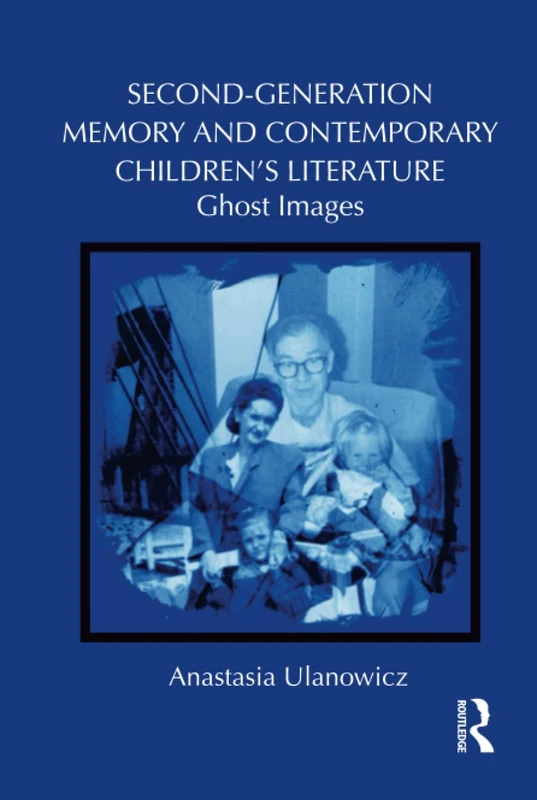
Routledge Second-Generation Memory and Contemporary Children's Literature: Ghost Images (Children's Literature and Culture)
Price data last checked 47 day(s) ago - refreshing...
We'll watch every seller, every day. One email when your price arrives.
It has never been this cheap. We have no record of a lower price.
£147 today · cheaper than every other day in the last 3 months
NEW HERE?
Amazon shows you one price. We show you all of them.
Tosheroon watches Amazon prices so you don't have to. Every product on Amazon has a price history — we make it visible. Set the price you'd actually pay, and we'll email you the second it gets there. No app, no account, one email.
WHAT'S ON THIS PAGE
when this has been cheap or pricey
where the price is heading next
all-time high & low, recent range
name your number, we'll email you
Price History & Forecast
Grey patches = out of stock. Cheaper = lower on the chart. Hover for exact prices.
Last 44 days • 44 data points (No recent data available)
Price Distribution
Price distribution over 44 days • 2 price levels
Price Analysis
Most common price: £149 (33 days, 75.0%)
Price range: £147 - £149
Price levels: 2 different prices over 44 days
Description
Product Specifications
- Brand
- Routledge
- Format
- hardcover
- ASIN
- 0415628253
- Category
- Books > Subjects > Poetry, Drama & Criticism > History & Criticism > Children's Literature Studies
- Domain
- Amazon UK
- Release Date
- 16 April 2013
- Listed Since
- 03 March 2012
Barcode
No barcode data available
Similar Products You Might Like
Open and Social Learning in Impact Communities and Smart Territories
Information Science Reference
Open and Social Learning in Impact Communities and Smart Territories (Advances in Educational Technologies and Instructional Design (AETID))
Information Science Reference

Marking Evil: Holocaust Memory in the Global Age: 21 (Making Sense of History, 21)
Berghahn Books

My Seven Lives: Jana Juráňová in Conversation with Agneša Kalinová
Purdue University Press
Down Memory Lane: Peter Ellinger's Memoirs
World Scientific Publishing Company
Philip Roth: American Pastoral, the Human Stain, the Plot Against America (Continuum Studies in Contemporary North American Fiction)
Bloomsbury

Routledge - Not All Claps and Cheers: Humor in Business
Routledge

Managing Screen Time in an Online Society - IGI Global Book
Information Science Reference

Second Chance: My Life in Things
Open Book Publishers
Keepers of Memory: The Holocaust and Transgenerational Identity (Bloomsbury Studies in Jewish Literature)
Lexington Books
Postnational Memory, Peace and War: Making Pasts Beyond Borders (Memory Studies: Global Constellations)
Routledge
Claude Simon: Fashioning the Past by Writing the Present
Fairleigh Dickinson University Press

Nexus 1: Essays in German Jewish Studies (Nexus: Essays in German Jewish Studies)
Camden House (NY)
Generative AI in Teaching and Learning (Premier Reference Source: Advances in Educational Technologies and Instructional Design)
Handbuch Organisationspädagogik: 17 (Organisation und Pädagogik, 17)
Springer VS
Care and Culturally Responsive Pedagogy in Online Settings
Information Science Reference

Akten des XII. Internationalen Germanistenkongresses Warschau 2010- Vielheit und Einheit der Germanistik weltweit: Post/Nationale Vorstellungen von ... Vereinigung Für Germanistik (Ivg))
Peter Lang Gmbh, Internationaler Verlag Der Wissenschaften
Why Do I Need a Teacher When I've got Google?: The essential guide to the big issues for every teacher
Routledge
Ambiguous Memory: The Nazi Past and German National Identity
Praeger
Routledge - Airbnb, Short-Term Rentals and the Future of Housing
Routledge
ECSCW 2009: Proceedings of the 11th European Conference on Computer Supported Cooperative Work, 7-11 September 2009, Vienna, Austria
Springer
ECSCW 2009: Proceedings of the 11th European Conference on Computer Supported Cooperative Work, 7-11 September 2009, Vienna, Austria
Springer
Undertaking Educational Challenges in the 21st Century (Research in Management Consulting): Research from the Field (Research on Education in Africa, the Caribbean, and the Middle East)
Information Age Publishing