We can't find the internet
Attempting to reconnect
Something went wrong
Hang in there while we get back on track
£21.32
About as cheap as it gets — within 5% of the all-time low it hit 2 months ago.
£21 today · all-time low £21 (Aug 2026) · usually the usual
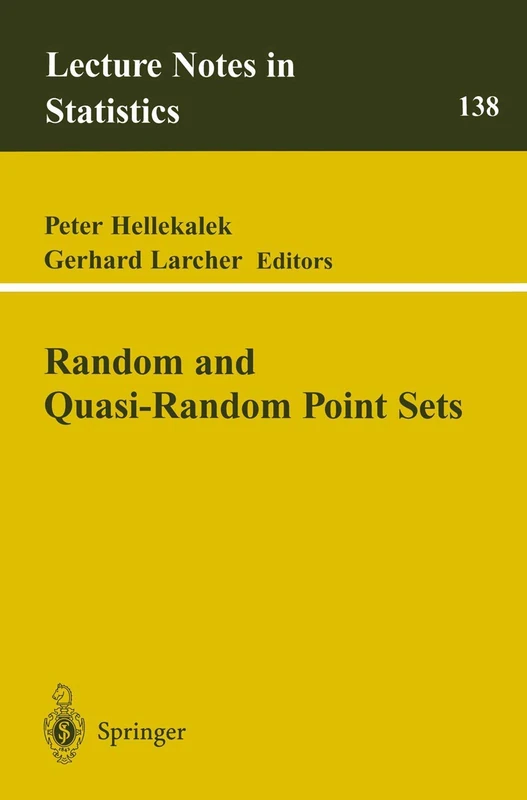
Springer Random and Quasi-Random Point Sets: 138 (Lecture Notes in Statistics, 138)
We'll watch every seller, every day. One email when your price arrives.
Price History & Forecast
Grey patches = out of stock. Cheaper = lower on the chart. Hover for exact prices.
Last 39 days · 39 data points (no recent data)
NEW HERE?
Amazon shows you one price. We show you all of them.
Tosheroon watches Amazon prices so you don't have to. Every product on Amazon has a price history — we make it visible. Set the price you'd actually pay, and we'll email you the second it gets there. No app, no account, one email.
WHAT'S ON THIS PAGE
when this has been cheap or pricey
where the price is heading next
all-time high & low, recent range
name your number, we'll email you
Price Distribution
Price distribution over 39 days • 2 price levels
Price Analysis
Most common price: £21 (26 days, 66.7%)
Price range: £21 - £28
Price levels: 2 different prices over 39 days
Description
Product Specifications
- Brand
- Springer
- Format
- paperback
- ASIN
- 0387985549
- Domain
- Amazon UK
- Publication Date
- 09 October 1998
- Listed Since
- 13 February 2007
Barcode
No barcode data available
Similar Products You Might Like
Nonparametric Methods in Change Point Problems: 243 (Mathematics and Its Applications, 243)
Springer

Probability Theory, Random Processes and Mathematical Statistics: 344 (Mathematics and Its Applications, 344)
Springer
High Dimensional Probability VIII: The Oaxaca Volume: 74 (Progress in Probability, 74)
Birkhauser
Zeros of Gaussian Analytic Functions and Determinantal Point Processes (University Lecture Series)
Theory of Stochastic Objects: Probability, Stochastic Processes and Inference (Chapman & Hall/CRC Texts in Statistical Science)
CRC Press
Stochastic Analysis and Related Topics: In Honour of Ali Süleyman Üstünel, Paris, June 2010: 22 (Springer Proceedings in Mathematics & Statistics, 22)
Springer
Monte Carlo and Quasi-Monte Carlo Methods 2012 - Springer Proceedings
Springer
Stochastic Analysis for Poisson Point Processes: Malliavin Calculus, Wiener-Itô Chaos Expansions and Stochastic Geometry: 7 (Bocconi & Springer Series, 7)
Springer

Stochastic Models, Statistics and Their Applications - Springer
Springer
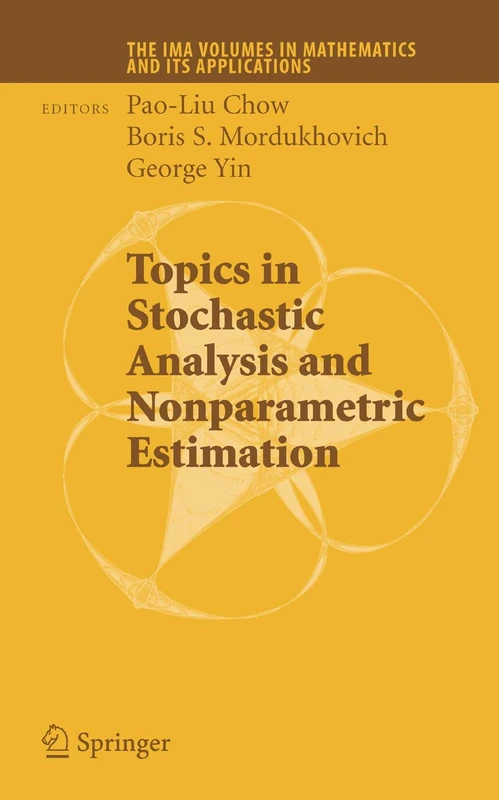
Topics in Stochastic Analysis and Nonparametric Estimation: 145 (The IMA Volumes in Mathematics and its Applications, 145)
Springer
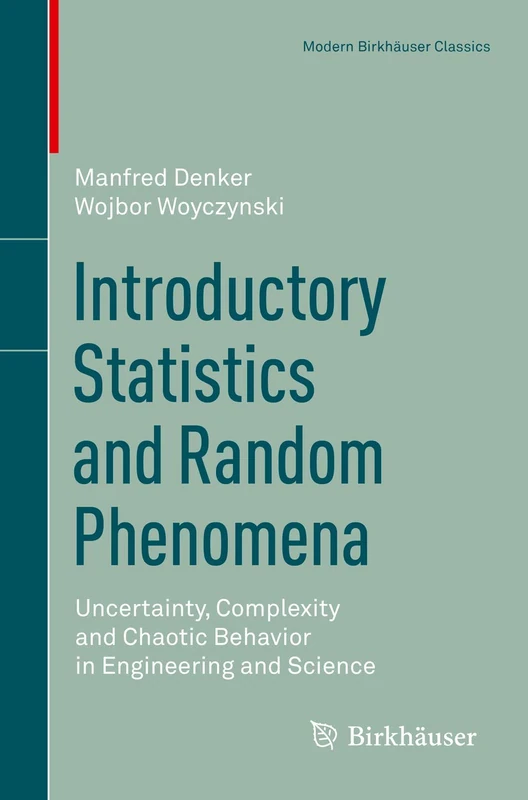
Introductory Statistics and Random Phenomena: Uncertainty, Complexity and Chaotic Behavior in Engineering and Science (Modern Birkhäuser Classics)
Birkhauser

Probability And Random Number: A First Guide To Randomness
World Scientific Publishing Company
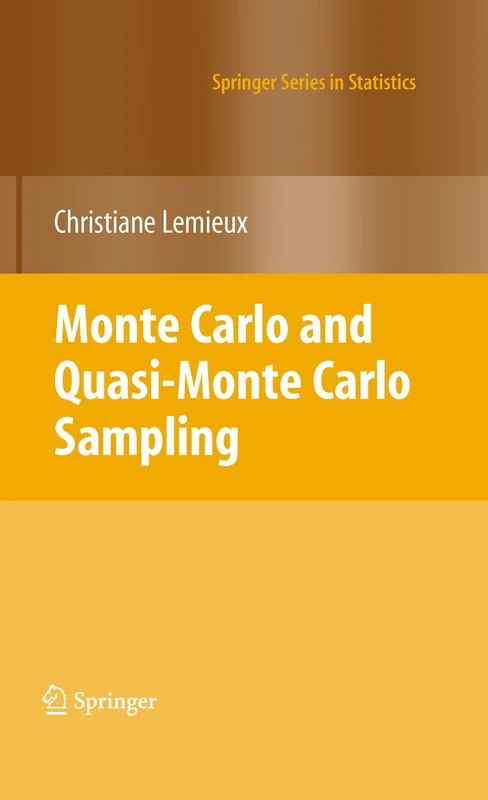
Monte Carlo and Quasi-Monte Carlo Sampling (Springer Series in Statistics)
Springer

Selected Works of David Brillinger - Probability & Statistics
Springer
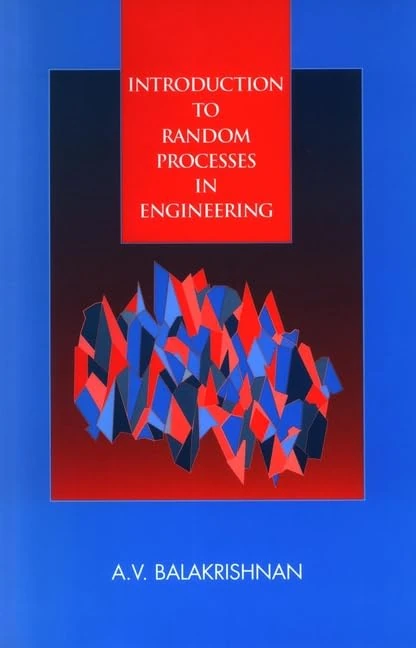
Introduction to Random Processes in Engineering
Wiley
Price unavailable
Stochastic Differential Equations: 72 (Ergebnisse der Mathematik und ihrer Grenzgebiete. 2. Folge, 72)
Springer
Stochastic Simulation and Monte Carlo Methods: Mathematical Foundations of Stochastic Simulation: 68 (Stochastic Modelling and Applied Probability, 68)
Springer

Superconcentration and Related Topics (Springer Monographs in Mathematics)
Springer
Probability-2: 95 (Graduate Texts in Mathematics, 95)
Springer