£125.03

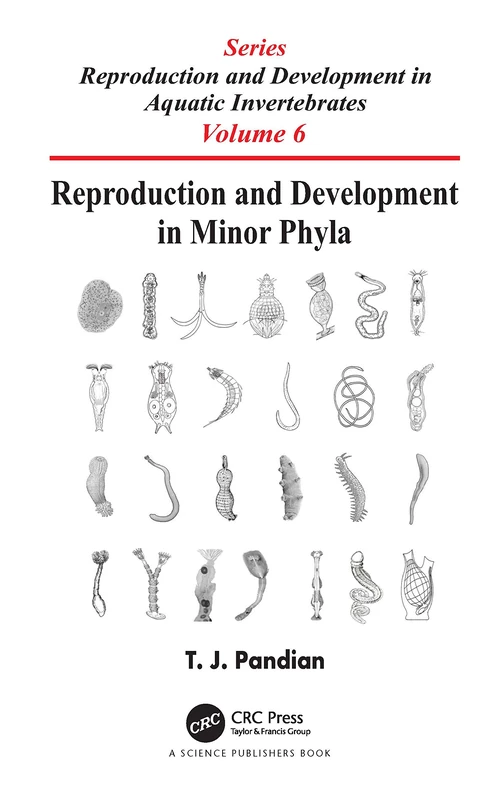
CRC Press Reproduction and Development in Minor Phyla (Reproduction and Development in Aquatic Invertebrates)

Price data checked 1 day ago

View at Amazon

We'll watch every seller, every day. One email when your price arrives.

This is the most expensive it has ever been. Walk away.

£125 today · previous high £125 · all-time low £125

NEW HERE?

Amazon shows you one price. We show you all of them.

Tosheroon watches Amazon prices so you don't have to. Every product on Amazon has a price history — we make it visible. Set the price you'd actually pay, and we'll email you the second it gets there. No app, no account, one email.

WHAT'S ON THIS PAGE

↓ Price chart
when this has been cheap or pricey
↓ Forecast
where the price is heading next
↓ Statistics
all-time high & low, recent range
↑ Price alert
name your number, we'll email you

Price History & Forecast

Grey patches = out of stock. Cheaper = lower on the chart. Hover for exact prices.

Last 90 days • 90 data points

Historical
Generating forecast...
£125.03 £124.70 £124.77 £124.84 £124.92 £124.99 £125.06 18 February 2026 12 March 2026 03 April 2026 25 April 2026 18 May 2026

Price Distribution

Price distribution over 90 days • 1 price levels

Days at Price
90 days 0 23 45 68 90 £125 Days at Price

Price Analysis

Most common price: £125 (90 days, 100.0%)

Price range: £125 - £125

Price levels: 1 different prices over 90 days

Description

Product Description The 26 recognized minor phyla comprise aberrant clades, as most of them terminate as blind offshoots. Untied from the discussion on their phylogenesis of minor phyla, this book is largely devoted, for the first time, to aspects of reproduction and development in minor phyletics. The minor phyla are not as speciose (1,795 species/phylum) as the major phyla (157,066 species/phylum) are. The accumulation of deleterious genes causes inbreeding depression among progenies arising from parthenogenesis, clonal multiplication and selfing hermaphrodites. The reason for the limited species diversity in minor phyla is traced to (i) eutelism in 65.7% of minor phyletics and (ii) existence of 21.6% clonals, (iii) 6.4% parthenogens and (iv) 1.2% selfing hermaphroditism. Gonochorism obligately requires motility to search for a mate. The combination of low motility and gonochorism from Placozoa to hemocoelomatic minor phyla has limited diversity to < 1,000 species. Over 19% of minor phyletics are hermaphrodites. With the need to manifest and maintain dual sexuality, fecundity of hermaphrodites may be reduced to 50% of that in gonochores. Adopting an array of strategies, < 100 hermaphrodites are selfers. In eutelics, mitotic division is ceased in somatic cells after hatching. For the first time, the prevalence of eutelism has been brought to light in numbers of all the six pseudocoelomate phyla and priapulids. Eutelism limits fecundity to 30–300 eggs in free-living pseudocoelomates, priapulids and possibly other hemocoelomates. In them, sperm production is less than that of egg production; as a result, a large fraction of their eggs is sterile. With a high proportion of non-eutelic gametic cells (35%), Nematoda and possibly Nematomorpha and Acanthocephala are more fecund than rotifers, in which the proportion is 15%. Briefly, the reasons for the limited species diversity in minor phyletics are traced to eutelism, parthenogenesis and clonal multiplication. Surprisingly, parthenogenesis and clonal multiplication mutually eliminate each other. This is also true of hermaphroditism and parthenogenesis. However, clonal multiplication is prevalent from structurally simplest Placozoa to the most complex Ascidiacea, except in pseudocoelomates and hemocoelomates. A limited number of cells and cell types, and the consequent structural simplicity facilitate manifestation of parthenogenesis in pseudocoelomates and parasitism in Mesozoa, Myxozoa, 59% of Nematoda, Nematomorpha, Acanthocephala and Pentastomida. Despite hermaphroditism, Bryozoa (5,700 species) and Ascidiacea (3,000 species) are speciose among minor phyla. For the first time, the importance of fusion of fragments or colonies – an event equivalent to gamete fusion at fertilization – is recognized as a source of new gene combination. Besides, the colonies in these minor phyla degenerate and regenerate more or less regularly. Only the fittest degenerated colonies may be rejuvenated and regenerated. About the Author T. J. Pandian, M.Sc., Ph.D. (Madras), Dr. rer. nat. (Kiel, Germany), D.Sc. (CIFE, Mumbai) is 80 +, recipient of the Bhatnagar Prize, the highest award for a scientist in India, Naga International Prize (Philippines) and one of the ten National Professorships in the country. Elected to all academies of India and Trieste, Italy, he has served as Editor/Editorial Board Member of leading international journals. During the last ten years, he has single handedly authored ten volumes published by CRC Press, USA.

Product Specifications

Format
hardcover
Domain
Amazon UK
Release Date
14 May 2021
Listed Since
19 September 2020

Barcode

No barcode data available

Similar Products You Might Like
Myxozoan Evolution, Ecology and Development
77% match

Myxozoan Evolution, Ecology and Development

Springer
£114.66 18 May 2026
Reproduction and Development of Marine Invertebrates of the Northern Pacific Coast: Data and Methods for the Study of Eggs, Embryos, and Larvae
77% match

Reproduction and Development of Marine Invertebrates of the Northern Pacific Coast: Data and Methods for the Study of Eggs, Embryos, and Larvae

University of Washington Press
£70.71 19 May 2026
Amphipoda: International Colloquium Proceedings: 7th (Developments in Hydrobiology)
76% match

Amphipoda: International Colloquium Proceedings: 7th (Developments in Hydrobiology)

Springer
£71.99 17 May 2026
Stem Cells in Marine Organisms
76% match

Stem Cells in Marine Organisms

Springer
£110.54 18 May 2026
Reproductive Biology of Teleost Fishes
75% match

Reproductive Biology of Teleost Fishes

Wiley
£116.06 04 May 2026
Digenetic Trematodes of Indian Marine Fishes
75% match

Digenetic Trematodes of Indian Marine Fishes

Springer
£106.21 17 May 2026
Women in Ichthyology: Anthology in Honour of ET, Ro and Genie: v. 15 (Developments in Environmental Biology of Fishes)
75% match

Women in Ichthyology: Anthology in Honour of ET, Ro and Genie: v. 15 (Developments in Environmental Biology of Fishes)

Springer

£78.71 04 May 2026
Global Diversity and Ecological Function of Parasites of Euphausiids
74% match

Global Diversity and Ecological Function of Parasites of Euphausiids

Springer
£107.12 18 May 2026
Encyclopedia of South American Aquatic Insects: Hemiptera - Heteroptera: Illustrated Keys to Known Families, Genera, and Species in South America
74% match

Encyclopedia of South American Aquatic Insects: Hemiptera - Heteroptera: Illustrated Keys to Known Families, Genera, and Species in South America

Springer

£143.27 18 May 2026
The Biology and Ecology of Tintinnid Ciliates: Models for Marine Plankton
74% match

The Biology and Ecology of Tintinnid Ciliates: Models for Marine Plankton

Wiley-Blackwell

£124.77 16 May 2026
Advances in the Biology of Turbellarians and Related Platyhelminthes: Proceedings of the Fourth International Symposium on the Turbellaria held at ... 1984: 32 (Developments in Hydrobiology, 32)
74% match

Advances in the Biology of Turbellarians and Related Platyhelminthes: Proceedings of the Fourth International Symposium on the Turbellaria held at ... 1984: 32 (Developments in Hydrobiology, 32)

Springer
£165.41 18 May 2026
Reproductive Ecology of Flowering Plants: A Manual
74% match

Reproductive Ecology of Flowering Plants: A Manual

Springer
£76.38 11 May 2026
Lepidostomatidae of India: Systematics, Ecology, and Conservation
74% match

Lepidostomatidae of India: Systematics, Ecology, and Conservation

CRC Press

£72.49 17 May 2026
The Comparative Embryology of Sponges
74% match

The Comparative Embryology of Sponges

Springer

£107.98 18 May 2026
Key Transitions in Animal Evolution
74% match

Key Transitions in Animal Evolution

CRC Press

£167.45 18 May 2026
Micromammals and Macroparasites: From Evolutionary Ecology to Management
73% match

Micromammals and Macroparasites: From Evolutionary Ecology to Management

Springer

£158.28 16 May 2026
Planktic Foraminifers in the Modern Ocean
73% match

Planktic Foraminifers in the Modern Ocean

Springer

£61.80 18 May 2026
Aquatic Mites from Genes to Communities
73% match

Aquatic Mites from Genes to Communities

Springer

£73.97 18 May 2026
The Biology of Ascidians
73% match

The Biology of Ascidians

Springer

£111.56 11 May 2026
Coelenterate Ecology and Behavior
73% match

Coelenterate Ecology and Behavior

Springer

£148.65 18 May 2026
Biomphalaria Snails and Larval Trematodes
73% match

Biomphalaria Snails and Larval Trematodes

Springer

£140.72 18 May 2026
Jellyfish Blooms: New Problems and Solutions: 212 (Developments in Hydrobiology, 212)
72% match

Jellyfish Blooms: New Problems and Solutions: 212 (Developments in Hydrobiology, 212)

Springer

£76.38 16 May 2026
Cephalopods Present and Past: New Insights and Fresh Perspectives
72% match

Cephalopods Present and Past: New Insights and Fresh Perspectives

Springer

£154.04 16 May 2026
Biological Control of Insect Pests Using Egg Parasitoids
72% match

Biological Control of Insect Pests Using Egg Parasitoids

Springer

£113.94 11 May 2026