We can't find the internet
Attempting to reconnect
Something went wrong
Hang in there while we get back on track
£66.15
This is the most expensive it has ever been. Walk away.
£66 today · previous high £66 · all-time low £55
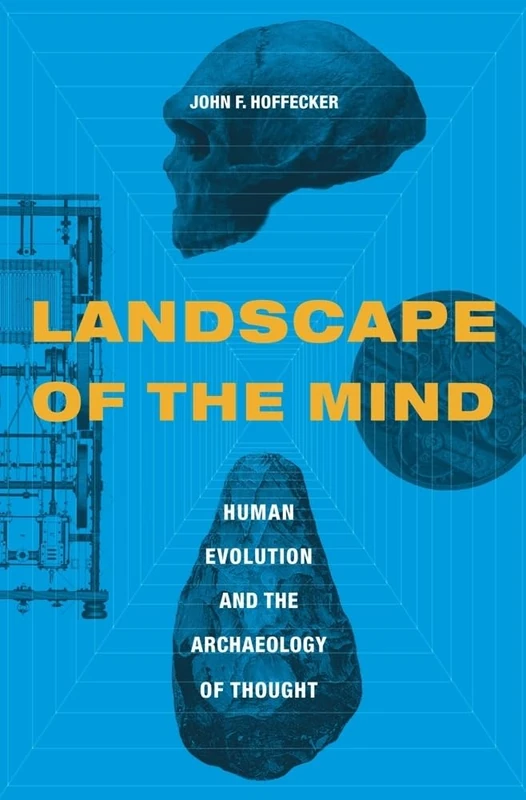
Columbia University Press Landscape of the Mind: Archeology and the Evolution of Human Consciousness: Human Evolution and the Archaeology of Thought
Price data last checked 50 day(s) ago - refreshing...
We'll watch every seller, every day. One email when your price arrives.
Price History & Forecast
Grey patches = out of stock. Cheaper = lower on the chart. Hover for exact prices.
Last 41 days · 41 data points (no recent data)
Price data last checked 50 day(s) ago - refreshing...
NEW HERE?
Amazon shows you one price. We show you all of them.
Tosheroon watches Amazon prices so you don't have to. Every product on Amazon has a price history — we make it visible. Set the price you'd actually pay, and we'll email you the second it gets there. No app, no account, one email.
WHAT'S ON THIS PAGE
when this has been cheap or pricey
where the price is heading next
all-time high & low, recent range
name your number, we'll email you
Price Distribution
Price distribution over 41 days • 2 price levels
Price Analysis
Most common price: £55 (27 days, 65.9%)
Price range: £55 - £66
Price levels: 2 different prices over 41 days
Description
Product Specifications
- Format
- hardcover
- ASIN
- 023114704X
- Domain
- Amazon UK
- Release Date
- 01 August 2010
- Listed Since
- 13 November 2009
Barcode
No barcode data available
Similar Products You Might Like

Biologically Inspired Cognitive Architectures 2012: Proceedings of the Third Annual Meeting of the BICA Society: 196 (Advances in Intelligent Systems and Computing, 196)
Springer

Machine Intelligence: Perspectives on the Computational Model (Artificial Intelligence Series)
Routledge

Biologically Inspired Cognitive Architectures 2021: Proceedings of the 12th Annual Meeting of the BICA Society: 1032 (Studies in Computational Intelligence, 1032)
Springer

Artificial Intelligence and Applications
Arcler Press

Societies of Brains: A Study in the Neuroscience of Love and Hate (INNS Series of Texts, Monographs, and Proceedings Series)
Psychology Press

Evolution of Mind, Brain, and Culture (Penn Museum International Research Conferences, 5)
University of Pennsylvania Press

Artificial Psychology: Psychological Modeling and Testing of AI Systems
Springer

AI*IA 2005: Advances in Artificial Intelligence: 9th Congress of the Italian Association for Artificial Intelligence Milan, Italy, September 21-23, ... (Lecture Notes in Computer Science, 3673)
Springer

My Beautiful AI: Love Story or a Nightmare?

Why Machines Will Never Rule the World: Artificial Intelligence without Fear
Routledge

INTELLIGENCE SCIENCE: 2 (SERIES ON INTELLIGENCE SCIENCE)
World Scientific Publishing Company

Big Brains and the Human Superorganism: Why Special Brains Appear in Hominids and Other Social Animals
Bloomsbury

Artificial Intelligence and Human Evolution: Contextualizing AI in Human History
Apress

Cultural Patterns And Neurocognitive Circuits II: East-West Connections: 5 (EXPLORING COMPLEXITY)
Scientific Publishing
Reductive Model of the Conscious Mind
Information Science Reference

The Long Evolution of Brains and Minds
Springer

AI in and for Africa: A Humanistic Perspective (Chapman & Hall/CRC Artificial Intelligence and Robotics Series)
Chapman and Hall/CRC

Neurodynamics of Cognition and Consciousness (Understanding Complex Systems)
Springer
Early Experience, the Brain, and Consciousness: An Historical and Interdisciplinary Synthesis
Routledge
A History of Bodies, Brains, and Minds: The Evolution of Life and Consciousness
MIT Press

Climate Change in the Age of Artificial Intelligence: Nature, Culture and the Politics of Technology (Artificial Intelligence, Simulation and Society)
Springer
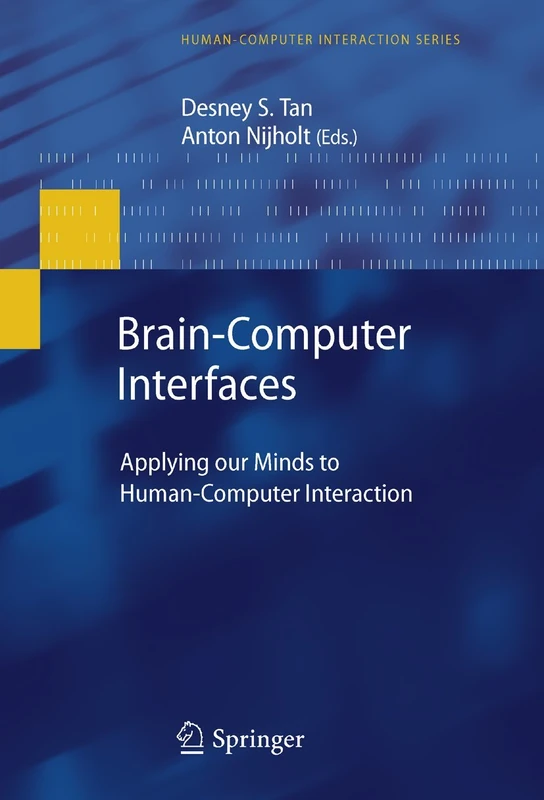
Brain-Computer Interfaces: Applying our Minds to Human-Computer Interaction: 0 (Human–Computer Interaction Series)
Springer