We can't find the internet
Attempting to reconnect
Something went wrong
Hang in there while we get back on track

£20.80
Columbia University Press In the Name of Humanity – Reflections on the Twentieth Century (European Perspectives: A Series in Social Thought and Cultural Criticism)
Price data last checked 62 day(s) ago - refreshing...
We'll watch every seller, every day. One email when your price arrives.
This is the most expensive it has ever been. Walk away.
£21 today · previous high £21 · all-time low £21
NEW HERE?
Amazon shows you one price. We show you all of them.
Tosheroon watches Amazon prices so you don't have to. Every product on Amazon has a price history — we make it visible. Set the price you'd actually pay, and we'll email you the second it gets there. No app, no account, one email.
WHAT'S ON THIS PAGE
when this has been cheap or pricey
where the price is heading next
all-time high & low, recent range
name your number, we'll email you
Price History & Forecast
Grey patches = out of stock. Cheaper = lower on the chart. Hover for exact prices.
Last 29 days · 29 data points (no recent data)
Price Distribution
Price distribution over 29 days • 1 price levels
Price Analysis
Most common price: £21 (29 days, 100.0%)
Price range: £21 - £21
Price levels: 1 different prices over 29 days
Description
Product Specifications
- Format
- hardcover
- ASIN
- 0231110200
- Domain
- Amazon UK
- Release Date
- 23 February 2000
- Listed Since
- 07 February 2007
Barcode
No barcode data available
Similar Products You Might Like
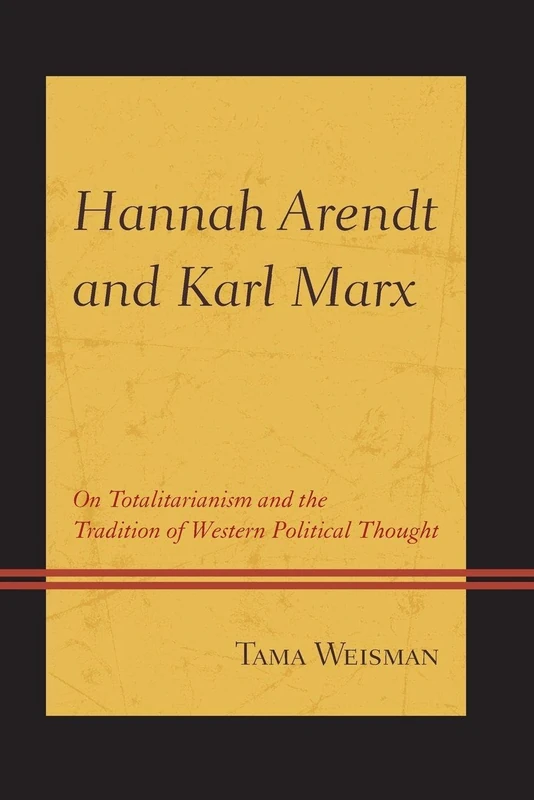
Hannah Arendt and Karl Marx: On Totalitarianism and the Tradition of Western Political Thought
Lexington Books

On Humanism (Thinking in Action)
Routledge

Hannah Arendt and Karl Marx: On Totalitarianism and the Tradition of Western Political Thought
Lexington Books

The Legacies of Totalitarianism: A Theoretical Framework
Cambridge University Press

The End of Economic Man: The Origins of Totalitarianism
Routledge

Routledge - The Politics of Human Life: Rethinking Subjectivity
Routledge

Hope and Memory – Lessons from the Twentieth Century
Princeton University Press

Political Investigations: Hegel, Marx and Arendt
Routledge
Erich Fromm's Critical Theory: Hope, Humanism, and the Future
Bloomsbury Academic

What is Humanism and Why Does it Matter? (Studies in Humanist Thought and Praxis)
Routledge

Totalitarianism and Philosophy (Routledge Focus on Philosophy)
Routledge
The Routledge Handbook of Dehumanization (Routledge Handbooks in Philosophy)
Routledge

The Politics of Retribution in Europe: World War II and Its Aftermath
Princeton University Press

Posthumanism in Italian Literature and Film: Boundaries and Identity (Italian and Italian American Studies)
MACMILLAN

Routledge - The End of Economic Man by Peter F. Drucker
Routledge

From Eastern Bloc to European Union: Comparative Processes of Transformation since 1990: 22 (Contemporary European History)
Berghahn Books

Political Investigations: Hegel, Marx and Arendt
Routledge
Humanism: An Introduction
Globe Pequot Press
Humanistic Approaches to Multiculturalism and Diversity: Perspectives on Existence and Difference
Routledge
Rescuing Human Rights: A Radically Moderate Approach
Cambridge University Press

The Challenge of Human Rights: Origin, Development and Significance
Wiley-Blackwell
The Human: Bare Life and Ways of Life
Bloomsbury

Imperfect Garden – The Legacy of Humanism
Princeton University Press

Hannah Arendt (Routledge Critical Thinkers)
Routledge