We can't find the internet
Attempting to reconnect
Something went wrong
Hang in there while we get back on track
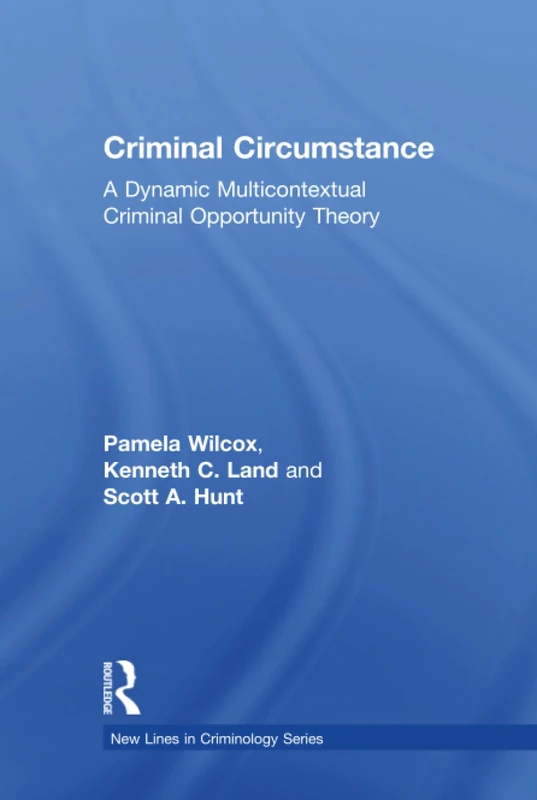
£150.03
This is the most expensive it has ever been. Walk away.
£150 today · previous high £150 · all-time low £137
Routledge Criminal Circumstance: A Dynamic Multi-Contextual Criminal Opportunity Theory (New Lines in Criminology Series)
We'll watch every seller, every day. One email when your price arrives.
Price History & Forecast
Grey patches = out of stock. Cheaper = lower on the chart. Hover for exact prices.
Last 62 days · 62 data points (no recent data)
NEW HERE?
Amazon shows you one price. We show you all of them.
Tosheroon watches Amazon prices so you don't have to. Every product on Amazon has a price history — we make it visible. Set the price you'd actually pay, and we'll email you the second it gets there. No app, no account, one email.
WHAT'S ON THIS PAGE
when this has been cheap or pricey
where the price is heading next
all-time high & low, recent range
name your number, we'll email you
Price Distribution
Price distribution over 62 days • 2 price levels
Price Analysis
Most common price: £150 (57 days, 91.9%)
Price range: £137 - £150
Price levels: 2 different prices over 62 days
Description
Product Specifications
- Brand
- Routledge
- Format
- hardcover
- ASIN
- 0202307204
- Domain
- Amazon UK
- Release Date
- 30 April 2002
- Listed Since
- 23 December 2006
Barcode
No barcode data available
Similar Products You Might Like

Criminology of Criminal Law - Advances in Criminological Theory Vol 8
Routledge

Youth Offending in Transition: The Search for Social Recognition
Routledge

Controlling Delinquents
Routledge

Negative Images: A Simple Matter of Black and White?: An Examination of 'Race' and the Juvenile Justice System
Routledge

Classics in Environmental Criminology
Routledge
Crime Prevention and Community Safety: New Directions (Published in association with The Open University)
Sage Publishing

Policing and Crime Control in Post-apartheid South Africa (Interdisciplinary Research Series in Ethnic, Gender, and Cla)
Routledge
Making Sense of Criminology
Polity

Drivers of Innovation, Entrepreneurship and Regional Dynamics (Advances in Spatial Science)
Springer

Fundamentals of Criminology
Cognella Academic Publishing
Routledge Handbook of Social, Economic, and Criminal Justice (Routledge International Handbooks)
Routledge
ECSCW 2009: Proceedings of the 11th European Conference on Computer Supported Cooperative Work, 7-11 September 2009, Vienna, Austria
Springer
ECSCW 2009: Proceedings of the 11th European Conference on Computer Supported Cooperative Work, 7-11 September 2009, Vienna, Austria
Springer

The Private Lives and Professional Identity of Medical Students
Routledge
Land of White Gloves?: A history of crime and punishment in Wales (History of Crime in the UK and Ireland)
Routledge
A Certain Share of Low Cunning: A History of the Bow Street Runners, 1792-1839
Routledge
Crime Victimization: Patterns, Impact, and System Response
Cognella Academic Publishing
Routine Activity and Rational Choice: Volume 5 (Advances in Criminological Theory)
Routledge
ECSCW 2013: Proceedings of the 13th European Conference on Computer Supported Cooperative Work, 21-25 September 2013, Paphos, Cyprus
Springer
Crime: Local and Global
Routledge
Essential Research Methods for Social Work
Moral Development Theories -- Secular and Religious: A Comparative Study: 68 (Contributions to the Study of Education)
Bloomsbury