We can't find the internet
Attempting to reconnect
Something went wrong
Hang in there while we get back on track
£50.00
Same price for 6 weeks. Today is much like next week.
£50 for 41 days straight · last change was Sep 2026
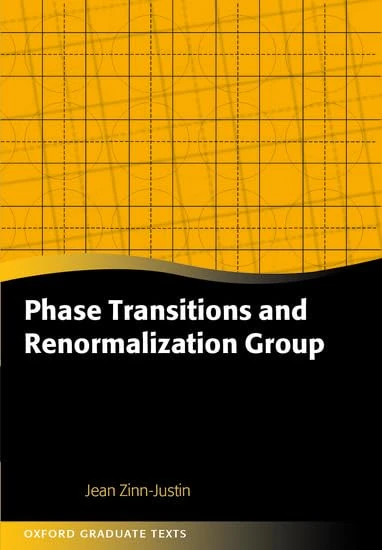
Oxford University Press Phase Transitions and Renormalization Group (Oxford Graduate Texts)
We'll watch every seller, every day. One email when your price arrives.
Price History & Forecast
Grey patches = out of stock. Cheaper = lower on the chart. Hover for exact prices.
Last 86 days · 86 data points (no recent data)
NEW HERE?
Amazon shows you one price. We show you all of them.
Tosheroon watches Amazon prices so you don't have to. Every product on Amazon has a price history — we make it visible. Set the price you'd actually pay, and we'll email you the second it gets there. No app, no account, one email.
WHAT'S ON THIS PAGE
when this has been cheap or pricey
where the price is heading next
all-time high & low, recent range
name your number, we'll email you
Price Distribution
Price distribution over 86 days • 3 price levels
Price Analysis
Most common price: £50 (41 days, 47.7%)
Price range: £47 - £52
Price levels: 3 different prices over 86 days
Description
Product Specifications
- Brand
- Oxford University Press
- Format
- paperback
- ASIN
- 0199665168
- Domain
- Amazon UK
- Publication Date
- 07 February 2013
- Listed Since
- 21 August 2012
Barcode
No barcode data available
Similar Products You Might Like
Phase Transitions and Renormalization Group (Oxford Graduate Texts)
Oxford University Press

Introduction to the Theory of Critical Phenomena: Mean Field, Fluctuations and Renormalization (2nd Edition)
World Scientific Publishing Company

Introduction to the Theory of Critical Phenomena: Mean Field, Fluctuations and Renormalization (2nd Edition)
World Scientific Publishing Company

Cambridge Scaling and Renormalization in Statistical Physics
Cambridge University Press

Introduction to the Functional Renormalization Group: 798 (Lecture Notes in Physics, 798)
Springer

The Theory of Critical Phenomena: An Introduction to the Renormalization Group (Oxford Science Publications)
Oxford University Press
Lectures On Phase Transitions And The Renormalization Group: 85 (Frontiers in Physics)
CRC Press
Lectures On Phase Transitions And The Renormalization Group: 85 (Frontiers in Physics)
HACHETTE PRAT

Non-Perturbative Renormalization
Scientific Publishing

Geometrical Formulation of Renormalization-Group Method as an Asymptotic Analysis: With Applications to Derivation of Causal Fluid Dynamics: 206 (Fundamental Theories of Physics, 206)
Springer
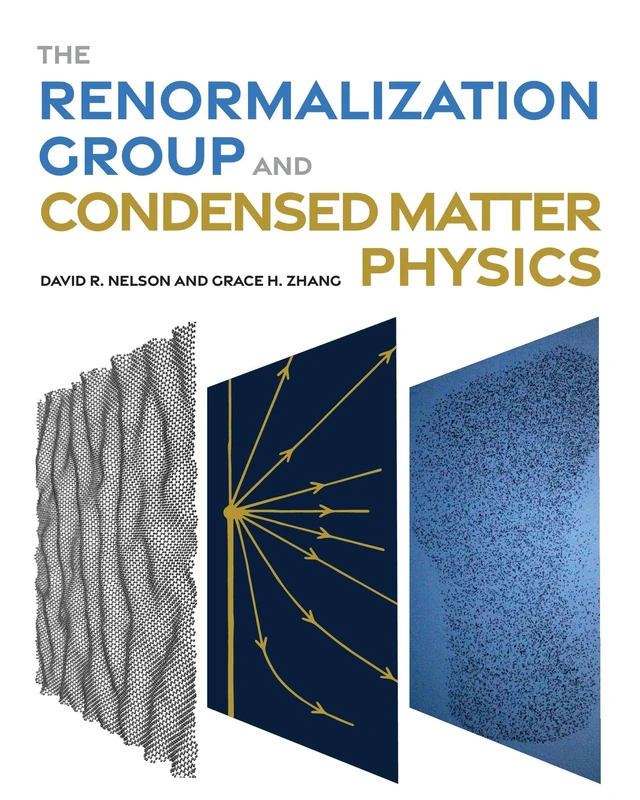
The Renormalization Group and Condensed Matter Physics
Princeton University Press

Oxford University Press - Quantum Field Theory 5th Edition
Oxford University Press

Quantum Field Theory and Critical Phenomena: Fifth Edition: 171 (International Series of Monographs on Physics)
Oxford University Press

Quantum Scaling in Many-Body Systems: An Approach to Quantum Phase Transitions
Cambridge University Press

Statistical Field Theory: An Introduction to Exactly Solved Models in Statistical Physics (Oxford Graduate Texts)
Oxford University Press

Renormalization Methods: Critical Phenomena, Chaos, Fractal Structures
Wiley

ORDER, DISORDER, AND CRITICALITY: ADVANCED PROBLEMS OF PHASE TRANSITION THEORY - VOLUME II
World Scientific Publishing Company
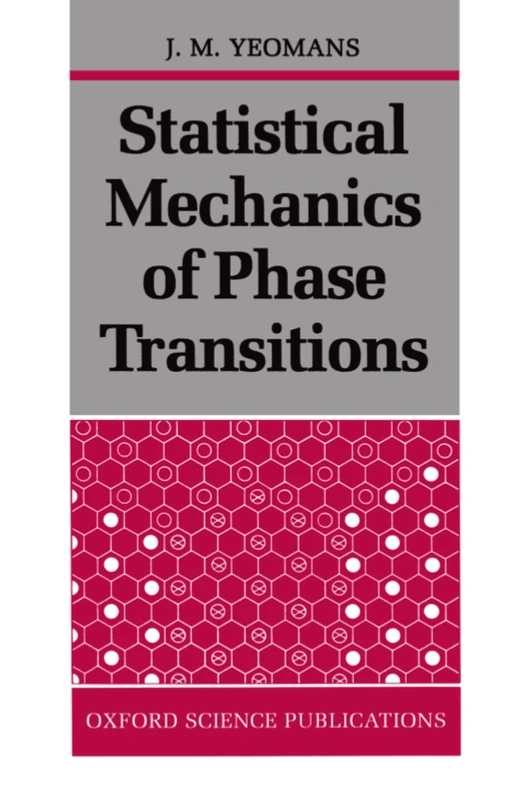
Statistical Mechanics of Phase Transitions (Oxford Science Publications)
Oxford University Press

STATISTICAL MECHANICS MADE SIMPLE (2ND EDITION): 2ED
World Scientific Publishing Company

Formulation of Statistical Mechanics Based on Thermal Pure Quantum States (Springer Theses)
Springer
Elements of Nonequilibrium Statistical Mechanics
Springer

Statistical Field Theory: Strong Coupling, Monte Carlo Methods, Conformal Field Theory, and Random Systems: 02 (Cambridge Monographs on Mathematical Physics)
Cambridge University Press
Statistical Mechanics: An Introductory Graduate Course (Graduate Texts in Physics)
Springer

Princeton University Press - Statistical Mechanics Textbook
Princeton University Press